Image relevance check
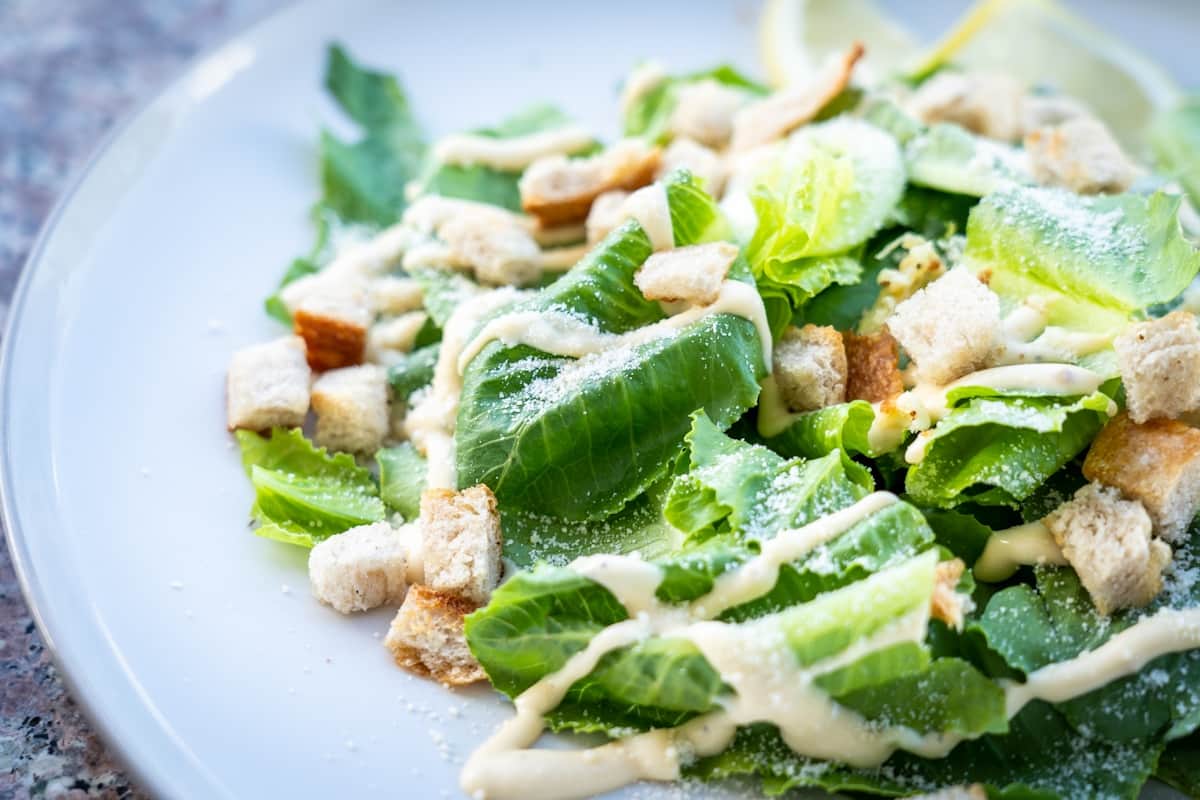
The hero image is reviewed against the dish title and alt text: Classic Caesar salad with romaine, croutons, Parmesan, and creamy dressing. The page also includes 2 visual checkpoints.
Prep Time
20 min
Cook Time
10 min
Total Time
30 min
Servings
4
4 side salads or 2 entree salads
Difficulty
Easy
Cost
Budget
$
Crisp romaine, homemade dressing, garlic croutons, and shaved Parmesan
A properly made Caesar salad with creamy homemade dressing, crunchy garlic croutons, and generous shaved Parmesan over crisp romaine hearts.
20m
Prep Time
10m
Cook Time
30m
Total Time
4
Servings
Easy
Difficulty
Budget $
Cost
Recipe by Luca Romano
Reviewed by RecipePool Mediterranean & Fresh Desk
Editorially reviewed for image relevance, instruction clarity, ingredient fit, visual checkpoints, and practical home-cooking usefulness.
//
A great Caesar salad is one of the most satisfying things you can eat, and a mediocre one — made with bottled dressing and bagged croutons — is one of the most forgettable. The difference is entirely in making the dressing from scratch. It takes five minutes, requires no cooking, and the result is so dramatically better than anything from a bottle that you will never go back.
This dressing hits every note: rich and creamy from the egg yolk and olive oil, briny and savory from the anchovies and Parmesan, bright from fresh lemon juice, and pungent from raw garlic. The anchovies are non-negotiable — they do not make the dressing taste fishy, they make it taste deeply savory in a way that nothing else can replicate. Even people who claim to hate anchovies love Caesar dressing.
The homemade garlic croutons are worth the extra ten minutes. Torn bread (not cut — the jagged edges catch more dressing and get crunchier) tossed with olive oil and garlic, then toasted until golden, is a completely different experience from the stale, pre-made variety. This is a salad that is truly worth making right.
Recipe-specific review checks
Last reviewed May 3, 2026 by RecipePool Mediterranean & Fresh Desk. The checks below are tied to this recipe's image, cooking method, and reader support sections.
The hero image is reviewed against the dish title and alt text: Classic Caesar salad with romaine, croutons, Parmesan, and creamy dressing. The page also includes 2 visual checkpoints.
The instructions are supported by oven and no-cook cues for a salad and side dish result, including timing, doneness, troubleshooting, and scaling guidance.
This page includes 4 tips, 4 recipe FAQs, and an editor note: Dress Classic Caesar Salad close to serving so nothing wilts.
Kitchen intelligence
Before you start
Start by having crusty bread, torn into bite-sized pieces, egg yolk, and heads romaine lettuce, washed and chopped ready, then preheat the oven to 375°F (190°C).
Timing read
Plan for 20 minutes prep and 10 minutes cooking. Midway check: Preheat the oven to 375°F (190°C).
Flavor logic
crusty bread, torn into bite-sized pieces, egg yolk, heads romaine lettuce, washed and chopped, and anchovy fillets, minced to a paste carry the main flavor and texture, so measure them before you adjust seasoning or heat.
Serving plan
For Italian and American, the finish should match this final cue: Add the cooled croutons and toss gently.
Visual checkpoints
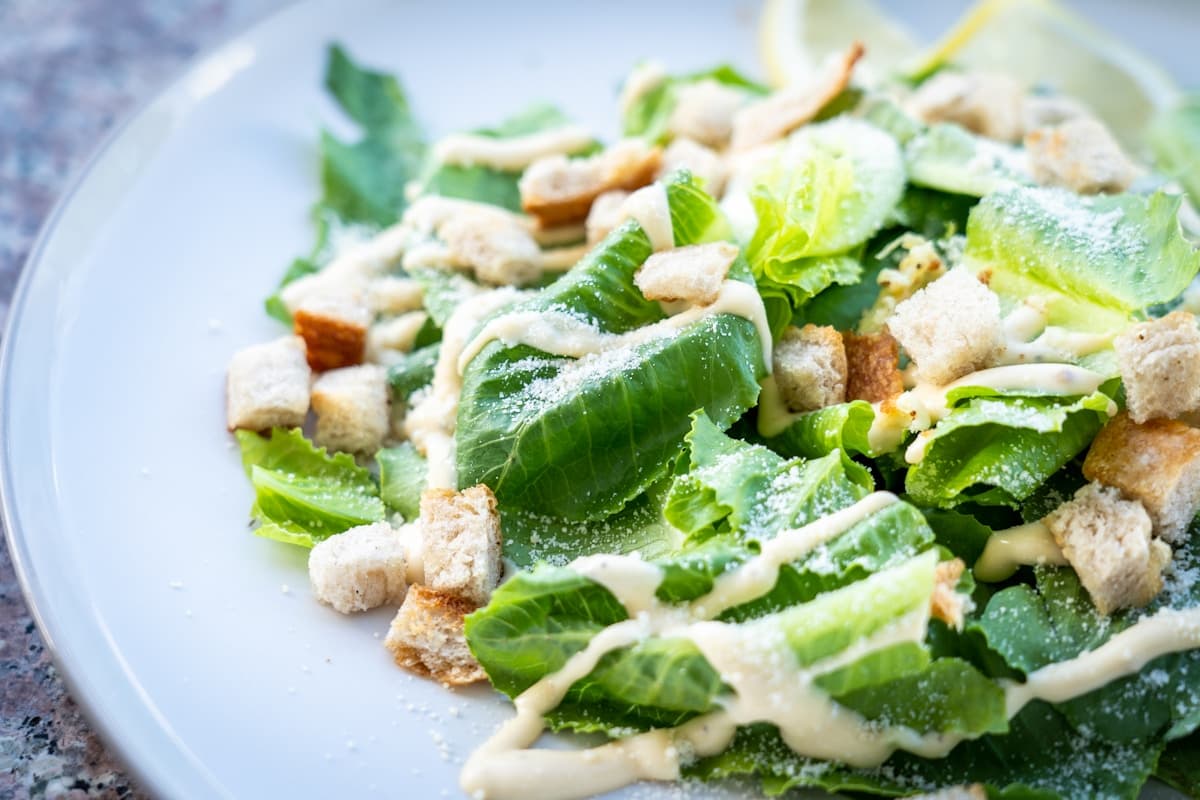
Classic Caesar Salad should look crisp and lightly coated, with visible croutons, Parmesan, and dressing clinging to the romaine.
Dry the romaine thoroughly, toast the croutons until crisp, and whisk the dressing before tossing.
Ingredient notes
The list is organized around caesar dressing, salad, and garlic croutons, which is the same order the cooking process expects.
Shopping focus
Crusty bread, egg yolk, heads romaine lettuce, and anchovy fillets carry most of the flavor. Spend attention there first.
Prep notes
Egg yolk yolk only, heads romaine lettuce washed, dried, and chopped, and crusty bread torn into irregular 1-inch pieces before heat goes on.
Adjustment logic
If needed, use Mayonnaise (2 tablespoons) in place of Raw egg yolk. Mayonnaise already contains emulsified egg and oil. Use it as the base and add the other dressing ingredients directly to it. Good option if you are concerned about raw eggs.
Optional items
Keep the main items intact; use garnish, heat, or acidity for small adjustments.
Shopping guide
Buy first
Egg yolk, heads romaine lettuce, and Parmesan cheese shavings for topping are the ingredients most likely to affect freshness and texture.
Package check
Crusty bread, olive oil, and fresh lemon juice may come in larger containers than needed; confirm amounts before buying backups.
Cost control
Use store brands, pantry staples, or simpler sides before changing the core ingredients.
Storage planning
Dressed Caesar salad does not store well — the lettuce wilts quickly.
Useful Kitchen Picks
These are optional, recipe-relevant searches for tools or pantry staples that can make this specific recipe easier to repeat.
Helpful Pick
Chef Knife
Useful tool
When the recipe is mostly prep, the tool that matters most is the one doing the cutting. A sharp chef’s knife makes the whole process faster and cleaner.
This recipe is won or lost in prep speed and cleaner cuts.
A good chef’s knife is still the single most useful kitchen upgrade for prep-heavy cooking.
Shop chef knife options for this recipeHelpful Pick
Worcestershire Sauce
Pantry upgrade
In brown gravies like this one, Worcestershire adds savory depth and slight tang that makes the sauce taste fuller with minimal extra work.
This ingredient does subtle but important flavor lifting in the gravy.
A good Worcestershire bottle is a practical pantry staple that shows up in many comfort-food recipes.
Shop worcestershire sauce for this recipeAs an Amazon Associate I earn from qualifying purchases. Product links are included when they are directly relevant to the recipe.
Preheat the oven to 375°F (190°C). Toss the torn bread pieces with olive oil, minced garlic, and salt on a baking sheet.
Spread in a single layer and bake for 10-12 minutes, tossing halfway through, until golden brown and crunchy. Let cool completely.
Note:Croutons continue to crisp as they cool, so pull them when they are golden but not dark.
In a medium bowl, combine the egg yolk, anchovy paste, grated garlic, lemon juice, Dijon mustard, and Worcestershire sauce. Whisk vigorously until smooth.
While whisking constantly, drizzle in the olive oil in a very slow, thin stream. The dressing should emulsify into a thick, creamy consistency. If it is too thick, whisk in a teaspoon of water.
Note:Adding the oil slowly is key to emulsification. If you pour it too fast, the dressing will break and be oily.
Fold in the finely grated Parmesan and season with salt and pepper to taste. Refrigerate until ready to use.
Place the chopped romaine in a large serving bowl. Add about two-thirds of the dressing and toss thoroughly until every leaf is lightly coated.
Note:It is better to start with less dressing and add more than to overdress the salad. You can always add, but you cannot take away.
Add the cooled croutons and toss gently. Top with shaved Parmesan and a few grinds of black pepper. Serve immediately with the remaining dressing on the side.
Technique notes
Key method moments pulled from the written steps.
Garlic Croutons
2 steps
Preheat the oven to 375°F (190°C).
Final seasoning should happen after the main ingredients have cooked together, when the balance is easiest to judge.
Use 375°F as the heat anchor, then adjust only if the food is browning too quickly or too slowly.
Caesar Dressing
3 steps
While whisking constantly, drizzle in the olive oil in a very slow, thin stream.
Mix until the sauce or seasoning looks consistent before moving on.
Adding the oil slowly is key to emulsification.
Assembly
2 steps
Place the chopped romaine in a large serving bowl.
Mix until the sauce or seasoning looks consistent before moving on.
It is better to start with less dressing and add more than to overdress the salad.
Doneness cues
Look for
Croutons continue to crisp as they cool, so pull them when they are golden but not dark.
Heat cue
Use the written temperature as the anchor, then confirm by texture before serving Classic Caesar Salad.
Timing cue
The clearest timed instruction is: Spread in a single layer and bake for 10-12 minutes, tossing halfway through, until golden brown and crunchy.
Final adjustment
Dress Classic Caesar Salad close to serving so nothing wilts.
Troubleshooting
Texture check
Check this step before adding heat or liquid: Croutons continue to crisp as they cool, so pull them when they are golden but not dark.
Timing check
Classic Caesar Salad starts with about 20 minutes prep. Steady heat and small adjustments are usually enough.
Seasoning check
Before changing seasoning, check this tip: Dry the romaine thoroughly after washing — a salad spinner is ideal.
Leftover check
This is a cold dish that does not require reheating.
Scaling guide
Half batch
For Classic Caesar Salad, halve the main ingredients evenly and season lightly until the final taste check.
Double batch
For Classic Caesar Salad, use a wider pan, larger pot, or second tray so the larger ingredient list has room.
Timing changes
Cook time starts around 10 minutes; prep starts around 20 minutes.
Leftover math
Dressed Caesar salad does not store well — the lettuce wilts quickly.
Make-ahead timeline
Earlier in the day
Start with this setup step: Preheat the oven to 375°F (190°C).
Before serving
Classic Caesar Salad moves quickly, so avoid starting until the table, sides, and serving pieces are close to ready.
Leftover plan
Dressed Caesar salad does not store well — the lettuce wilts quickly.
Reheat without damage
This is a cold dish that does not require reheating.
Serve with crusty artisan bread for dipping
Finish with a drizzle of high-quality extra virgin olive oil
Pair with a simple arugula salad dressed in lemon vinaigrette
Serve with classic coleslaw and cornbread on the side
Meal fit
Meal role
Pair this salad and side dish with sides that add contrast: crisp, fresh, acidic, or starchy as needed.
Best timing
Low-friction timing for Classic Caesar Salad. Add a small buffer if serving guests.
Diet fit
Stay in the italian and american lane with sides and condiments.
Occasion fit
Good for weeknight dinner and date night when sides can be handled while the main recipe cooks.
Mayonnaise already contains emulsified egg and oil. Use it as the base and add the other dressing ingredients directly to it. Good option if you are concerned about raw eggs.
Anchovy paste is the easiest swap — same flavor, no mincing. Capers provide brine and saltiness but a different flavor profile.
Little gem is a smaller, sweeter variety of romaine that works beautifully. Baby kale adds a more assertive flavor and holds dressing well.
Dry the romaine thoroughly after washing — a salad spinner is ideal. Wet leaves dilute the dressing and prevent it from clinging.
For the best shaved Parmesan, use a vegetable peeler on a block of Parmigiano-Reggiano. The large, thin shavings are more visually appealing and have better texture than grated cheese.
Make the croutons ahead and store in an airtight container at room temperature for up to 3 days. They are a great snack on their own.
For an entree salad, top with grilled chicken breast, seared shrimp, or a soft-boiled egg.
Dressed Caesar salad does not store well — the lettuce wilts quickly. Store undressed components separately: washed and dried romaine in a bag with a paper towel for up to 3 days, dressing in a jar in the refrigerator for up to 5 days, and croutons in an airtight container at room temperature for up to 3 days.
This is a cold dish that does not require reheating. If the dressing has thickened in the fridge, whisk in a teaspoon of water or lemon juice to loosen it before dressing the salad. Croutons can be re-crisped in a 350°F oven for 3-4 minutes if they have softened.
Dress Classic Caesar Salad close to serving so nothing wilts. Taste once everything is combined, then adjust salt and acid.
Per serving (About 2 cups dressed salad) · 4 servings
A moderate-calorie serving · based on a 2,000 cal daily diet
Nutritional values are approximate and may vary based on specific ingredients and preparation methods.
Tell us what was unclear, what you changed, or what needs another look in Classic Caesar Salad.
Keep Browsing
Follow the ingredients, cooking style, or curated collections that connect naturally to Classic Caesar Salad.
Classic Caesar Salad is kept in the public catalog after review for image relevance, ingredient fit, instruction clarity, and practical page quality.