Before you start
Set up the first moves
Start by having well-marbled beef (ribeye or sirloin), sliced paper-thin, soy sauce, and mirin ready, then mix soy sauce, mirin, sugar, and dashi to make warishita sauce.
Photo: ajari / Wikimedia Commons / CC BY 2.0
Prep Time
20 min
Cook Time
20 min
Total Time
40 min
Servings
4
4 servings
Difficulty
Medium
Cost
Moderate
$$
Makes 4 servings · Technique: Stovetop
Classic sukiyaki: thinly sliced beef, tofu, and vegetables simmered in a sweet-savory warishita broth. Dip in raw beaten egg.
20m
Prep Time
20m
Cook Time
40m
Total Time
4
Servings
Medium
Difficulty
Moderate $$
Cost
Recipe by RecipePool Editorial Team
/
Sukiyaki cooks beef, tofu, and vegetables in a sweet-savory soy broth right at the table. Traditionally dipped in raw beaten egg in some regions — optional at home.
Slice the beef paper-thin so it cooks in seconds.
Kitchen intelligence
Before you start
Start by having well-marbled beef (ribeye or sirloin), sliced paper-thin, soy sauce, and mirin ready, then mix soy sauce, mirin, sugar, and dashi to make warishita sauce.
Timing read
Plan for 20 minutes prep and 20 minutes cooking. Midway check: Add remaining ingredients in sections around the pot.
Flavor logic
well-marbled beef (ribeye or sirloin), sliced paper-thin, soy sauce, mirin, and sugar carry the main flavor and texture, so measure them before you adjust seasoning or heat.
Serving plan
For Asian and Japanese, the finish should match this final cue: Serve with udon noodles on the side or cooked in remaining broth.
Visual checkpoints
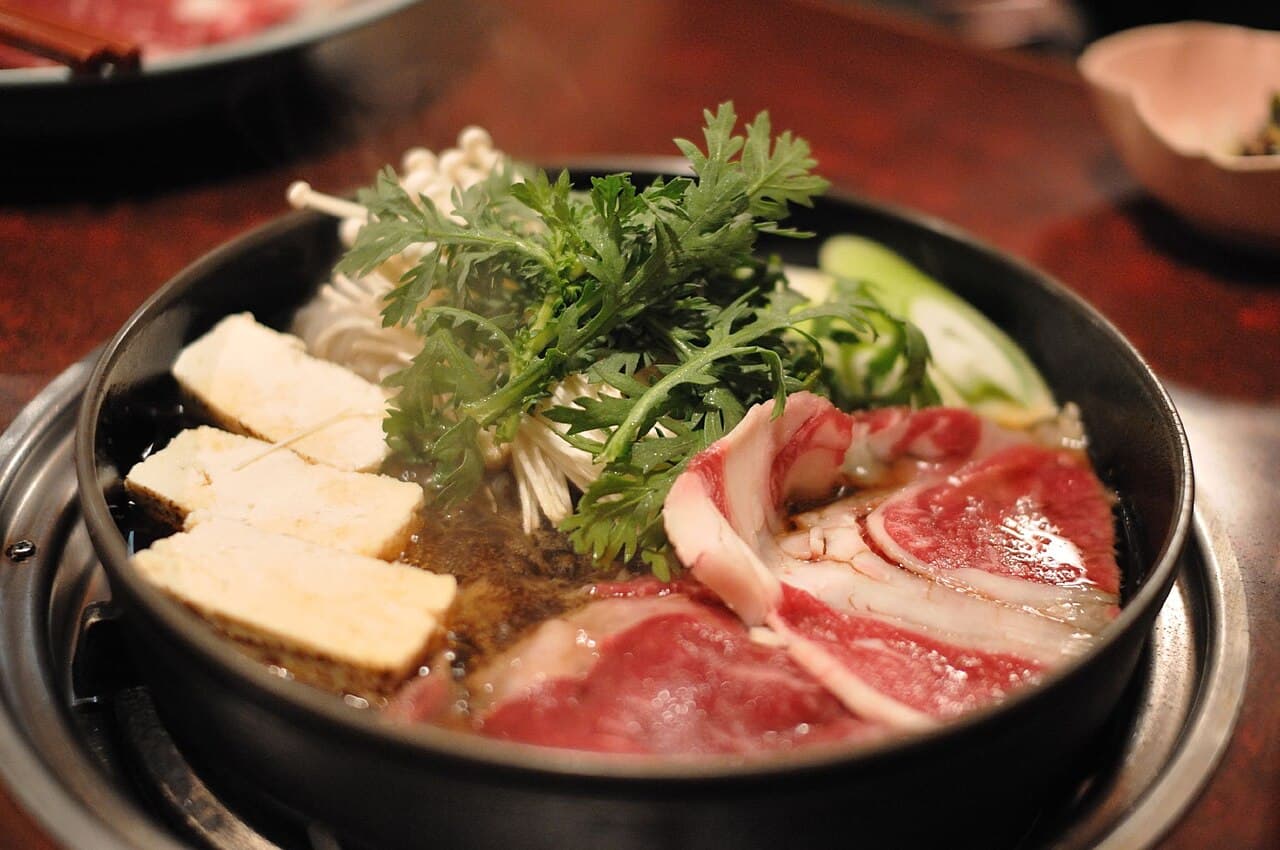
Sukiyaki should look close to this before serving: distinct textures, clear color contrast, and a ready-to-eat finish.
Have 1 lb well-marbled beef (ribeye or sirloin), sliced paper-thin, 1/2 cup soy sauce, 1/2 cup mirin measured and ready before heat goes on. Mix soy sauce, mirin, sugar, and dashi to make warishita sauce.
Serve with udon noodles on the side or cooked in remaining broth.
Ingredient notes
Shopping focus
Well-marbled beef (ribeye or sirloin), soy sauce, mirin, and sugar carry most of the flavor. Spend attention there first.
Prep notes
Set up the ingredients in list order and keep time-sensitive items nearby.
Adjustment logic
If needed, use Spinach or watercress in place of Shungiku. Add spinach in the last 2 minutes of cooking.
Optional items
Keep the main items intact; use garnish, heat, or acidity for small adjustments.
Shopping guide
Buy first
Well-marbled beef (ribeye or sirloin), bunch shungiku (chrysanthemum greens) or spinach, and raw eggs are the ingredients most likely to affect freshness and texture.
Package check
Soy sauce, mirin, and sugar may come in larger containers than needed; confirm amounts before buying backups.
Cost control
Use store brands, pantry staples, or simpler sides before changing the core ingredients.
Storage planning
Best eaten immediately.
Useful Kitchen Picks
These are optional, recipe-relevant searches for tools or pantry staples that can make this specific recipe easier to repeat.
Helpful Pick
Mirin
Pantry upgrade
Mirin quietly rounds out sauces like this with sweetness and gloss. It is one of those ingredients you notice more when it is missing.
This adds balance, not just sweetness.
A bottle of mirin becomes surprisingly versatile once it is in the pantry.
Shop mirin for this recipeAs an Amazon Associate I earn from qualifying purchases. Product links are included when they are directly relevant to the recipe.
Mix soy sauce, mirin, sugar, and dashi to make warishita sauce.
Arrange beef, tofu, mushrooms, shirataki, scallions, cabbage, and greens on a platter.
Heat a shallow pot or sukiyaki pan over medium heat. Pour in half the warishita sauce.
Add beef slices in a single layer and cook 1-2 minutes until just browned.
Add remaining ingredients in sections around the pot. Pour remaining sauce over everything.
Simmer gently for 8-10 minutes, pushing ingredients into the broth as you eat.
Each person beats one raw egg in a small bowl and dips cooked ingredients into the egg before eating.
Serve with udon noodles on the side or cooked in remaining broth.
Technique notes
Key method moments pulled from the written steps.
Prep phase
3 steps
Arrange beef, tofu, mushrooms, shirataki, scallions, cabbage, and greens on a platter.
Finish this step before adding ingredients or changing the heat.
Move on after this instruction is complete: arrange beef, tofu, mushrooms, shirataki, scallions, cabbage, and greens on a platter.
Cook phase 1
3 steps
Add remaining ingredients in sections around the pot.
Mix until the sauce or seasoning looks consistent before moving on.
Move on after this instruction is complete: add remaining ingredients in sections around the pot.
Finish phase
2 steps
Serve with udon noodles on the side or cooked in remaining broth.
Add toppings after cooking so fresh, crunchy, or acidic finishes stay distinct.
Plate while the main dish is still hot, then add crunchy, acidic, or fresh garnishes right before serving.
Doneness cues
Look for
Serve with udon noodles on the side or cooked in remaining broth.
Heat cue
If the surface is changing too fast before the center or sauce is ready, lower the heat and give the recipe time to catch up.
Timing cue
Use the 20 minutes prep window to get organized so the cooking stage can move without rushed substitutions.
Final adjustment
Read through Sukiyaki once before you start.
Troubleshooting
Texture check
Check this step before adding heat or liquid: Add remaining ingredients in sections around the pot.
Timing check
Sukiyaki starts with about 20 minutes prep. Watch texture and seasoning at the midpoint.
Seasoning check
Before changing seasoning, check this tip: Use the most well-marbled beef you can find — ribeye is ideal.
Leftover check
Reheat gently in a pot with a splash of dashi.
Scaling guide
Half batch
For Sukiyaki, halve the main ingredients evenly and season lightly until the final taste check.
Double batch
For Sukiyaki, use a wider pan, larger pot, or second tray so the moderate ingredient list has room.
Timing changes
Cook time starts around 20 minutes; prep starts around 20 minutes.
Leftover math
Best eaten immediately.
Make-ahead timeline
Earlier in the day
Start with this setup step: Mix soy sauce, mirin, sugar, and dashi to make warishita sauce.
Before serving
Plan around 20 minutes of prep and 20 minutes of cooking so the final step lands near serving time.
Leftover plan
Best eaten immediately.
Reheat without damage
Reheat gently in a pot with a splash of dashi.
Serve over steamed jasmine or sticky rice
Pair with a side of pickled vegetables or kimchi
Add a drizzle of sesame oil and toasted sesame seeds for extra flavor
Meal fit
Meal role
Pair this main course and soup & stew with sides that add contrast: crisp, fresh, acidic, or starchy as needed.
Best timing
Moderately involved timing for Sukiyaki. Add a small buffer if serving guests.
Diet fit
Keep the sides aligned with dairy-free and healthy: vegetables, grains, sauces, or garnishes should follow the same constraint.
Occasion fit
Good for weeknight dinner and date night when sides can be handled while the main recipe cooks.
Add spinach in the last 2 minutes of cooking.
Not identical but captures the sweet-savory balance.
Both absorb the warishita sauce well.
Use the most well-marbled beef you can find — ribeye is ideal.
A cast iron skillet works well if you don't have a sukiyaki pan.
Raw egg dipping is traditional and safe with pasteurized eggs if you're concerned.
Add ingredients in batches as you eat rather than all at once — this keeps everything fresh.
Best eaten immediately. The communal cooking experience doesn't translate well to leftovers.
Reheat gently in a pot with a splash of dashi. Cook fresh egg for dipping.
Read through Sukiyaki once before you start. The method timing is a guide—texture and seasoning matter more than the clock.
Per serving (1 serving)
A moderate-calorie serving · based on a 2,000 cal daily diet
Nutritional values are approximate and may vary based on specific ingredients and preparation methods.
Tell us what was unclear, what you changed, or what needs another look in Sukiyaki.
Keep Browsing
Follow the ingredients, cooking style, or curated collections that connect naturally to Sukiyaki.