Image relevance check
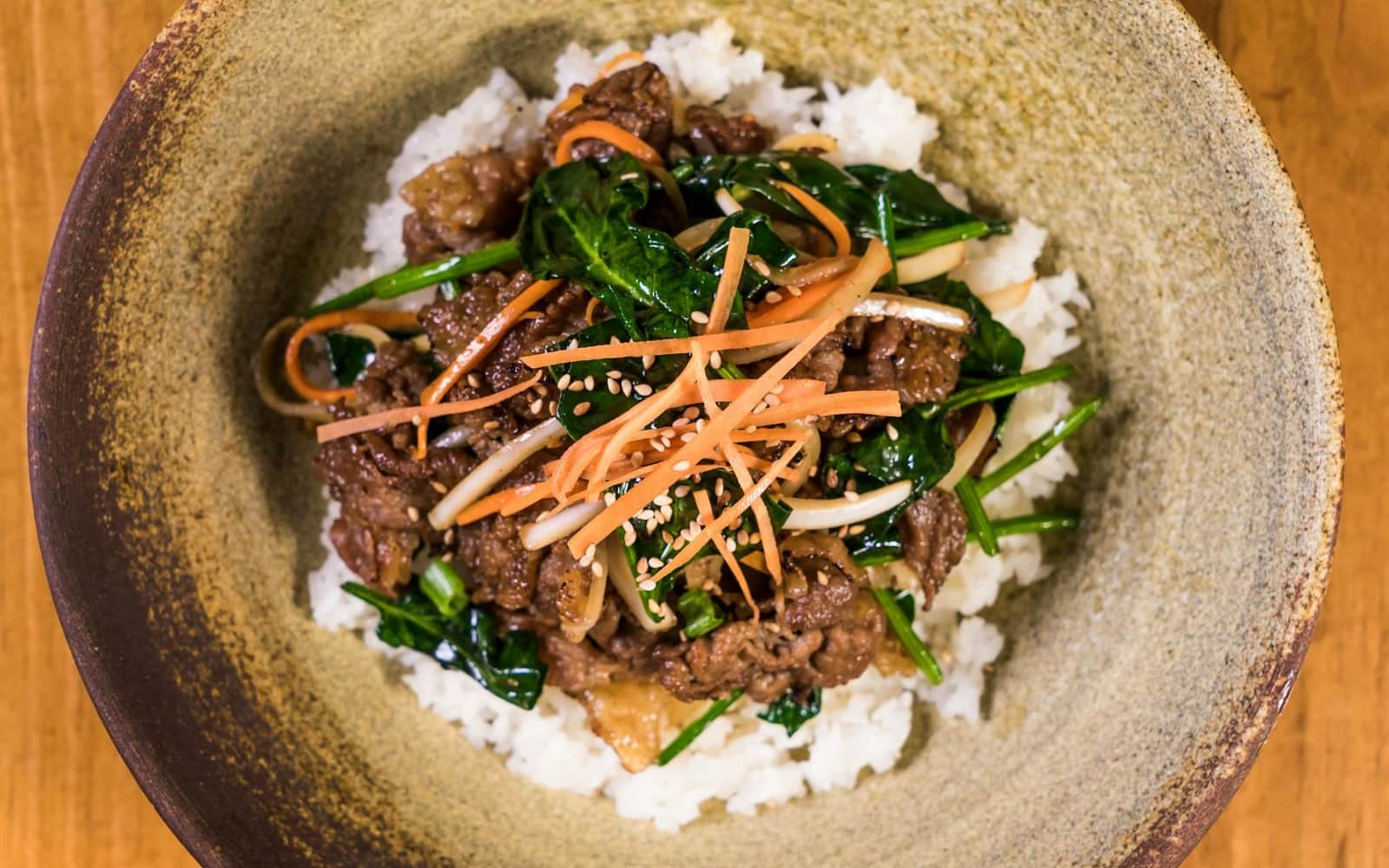
The hero image is reviewed against the dish title and alt text: Korean beef bulgogi bowl with rice, vegetables, scallions, and glossy marinated beef. The page also includes 3 visual checkpoints.
Prep Time
20 min
Cook Time
10 min
Total Time
2 hr 30 min
Servings
4
About 4 servings
Difficulty
Medium
Cost
Moderate
$$
Sweet, savory, and smoky marinated beef grilled to caramelized perfection
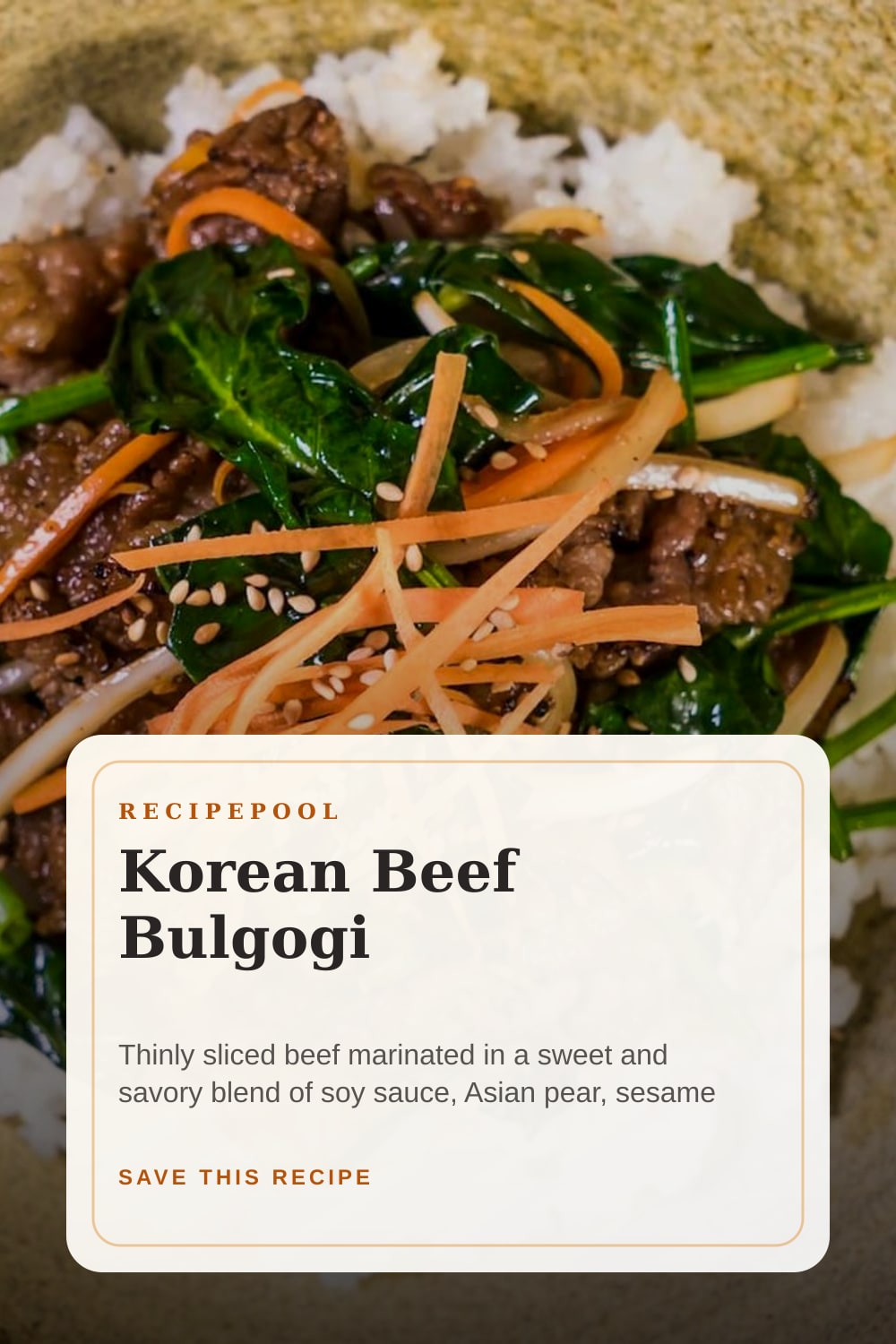
Thinly sliced beef marinated in a sweet and savory blend of soy sauce, Asian pear, sesame oil, and garlic, then grilled until beautifully charred. A Korean BBQ classic.
20m
Prep Time
10m
Cook Time
150m
Total Time
4
Servings
Medium
Difficulty
Moderate $$
Cost
Recipe by Sarah Chen
Reviewed by RecipePool Global Kitchen Desk
Editorially reviewed for image relevance, instruction clarity, ingredient fit, visual checkpoints, and practical home-cooking usefulness.
//
Bulgogi — literally "fire meat" in Korean — is one of the most iconic dishes in Korean cuisine, and for good reason. Paper-thin slices of beef are bathed in a marinade that balances sweet, salty, savory, and nutty in perfect harmony, then cooked over high heat until the edges caramelize and char. The result is deeply flavorful meat that is tender enough to practically melt in your mouth.
The traditional marinade relies on a secret weapon: Asian pear. This fruit contains enzymes that naturally tenderize the beef while adding a subtle, clean sweetness that cane sugar simply cannot replicate. Combined with soy sauce, toasted sesame oil, garlic, and a touch of black pepper, it creates a marinade that infuses every fiber of the meat.
Serve bulgogi wrapped in crisp lettuce leaves with steamed rice, pickled radish, and a dab of gochujang, or pile it into a rice bowl with all the fixings. Once you have tasted homemade bulgogi, you will understand why Korean BBQ restaurants have such devoted followings.
Recipe-specific review checks
Last reviewed May 20, 2026 by RecipePool Global Kitchen Desk. The checks below are tied to this recipe's image, cooking method, and reader support sections.
The hero image is reviewed against the dish title and alt text: Korean beef bulgogi bowl with rice, vegetables, scallions, and glossy marinated beef. The page also includes 3 visual checkpoints.
The instructions are supported by stovetop and grill cues for a main course result, including timing, doneness, troubleshooting, and scaling guidance.
This page includes 4 tips, 2 recipe FAQs, and an editor note: Read through Korean Beef Bulgogi once before you start.
Kitchen intelligence
Before you start
Start by having steamed white rice, ribeye or sirloin, thinly sliced, and asian pear, grated (or 2 tbsp pear juice) ready, then place the beef in the freezer for 20 minutes to firm it up, making it easier to slice thinly.
Timing read
Plan for 20 minutes prep and 10 minutes cooking. Midway check: If your butcher can slice it for you, even better.
Flavor logic
steamed white rice, ribeye or sirloin, thinly sliced, asian pear, grated (or 2 tbsp pear juice), and butter lettuce leaves for wrapping carry the main flavor and texture, so measure them before you adjust seasoning or heat.
Serving plan
For Asian and Korean, the finish should match this final cue: Transfer the cooked bulgogi to a serving platter.
Visual checkpoints
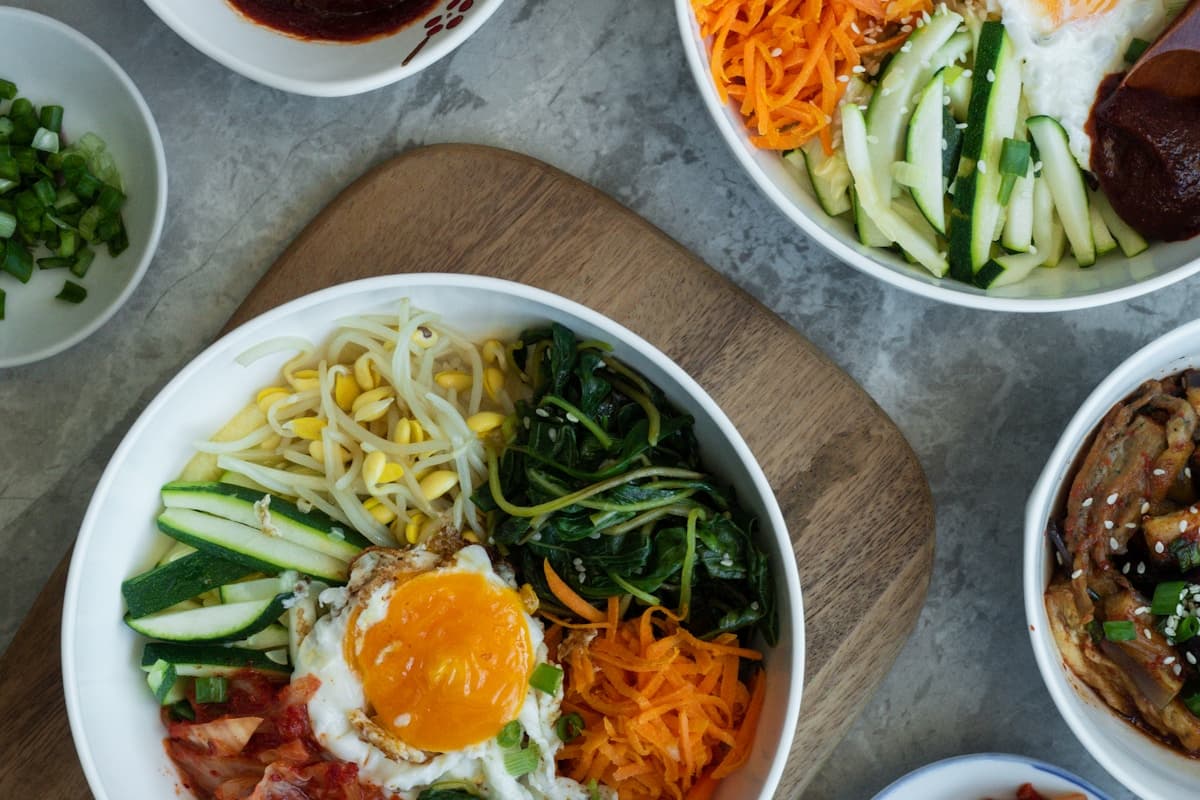
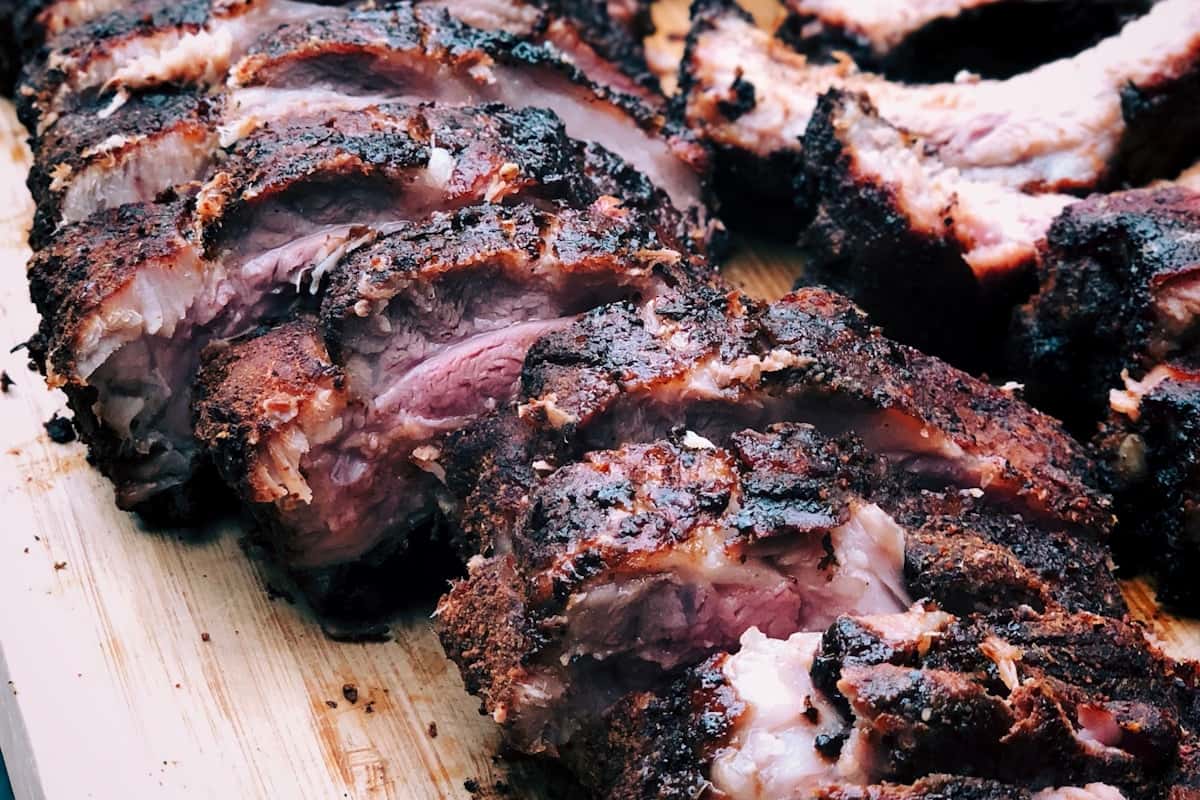
Korean Beef Bulgogi should look close to this before serving: clear color contrast, distinct texture, and a ready-to-eat finish.
Have 1.5 lbs ribeye or sirloin, thinly sliced, steamed white rice, 1/2 asian pear, grated (or 2 tbsp pear juice) measured and ready before heat goes on. Place the beef in the freezer for 20 minutes to firm it up, making it easier to slice thinly.
Transfer the cooked bulgogi to a serving platter.
Ingredient notes
The list is organized around bulgogi marinade and for serving, which is the same order the cooking process expects.
Shopping focus
Steamed white rice, ribeye or sirloin, asian pear, and butter lettuce leaves for wrapping carry most of the flavor. Spend attention there first.
Prep notes
Ribeye or sirloin sliced 1/8-inch thin against the grain, asian pear grated, and sesame seeds for garnish for garnish before heat goes on.
Adjustment logic
If needed, use Flank steak, skirt steak, or sirloin in place of Ribeye. All work well when sliced thin. Ribeye has the most marbling and tenderness. Flank and skirt are leaner but more beefy in flavor.
Optional items
Sesame seeds for garnish can be adjusted without changing the core structure of the dish.
Shopping guide
Buy first
Butter lettuce leaves for wrapping is the ingredient most likely to affect freshness and texture.
Package check
Soy sauce, sesame seeds for garnish, and brown sugar may come in larger containers than needed; confirm amounts before buying backups.
Cost control
If you need to trim cost, start with optional items like sesame seeds for garnish; keep the core ingredients unchanged.
Storage planning
Cooked bulgogi can be stored in an airtight container in the refrigerator for up to 3 days.
Useful Kitchen Picks
These are optional, recipe-relevant searches for tools or pantry staples that can make this specific recipe easier to repeat.
Helpful Pick
Thermometer
Useful tool
This is the kind of recipe where doneness changes the result fast. A quick thermometer helps you pull it at the right moment instead of guessing.
The easiest upgrade here is accuracy, not another pan.
If you cook meat or fish regularly, an instant-read thermometer gets used constantly.
Shop thermometer options for this recipeHelpful Pick
Mirin
Pantry upgrade
Mirin quietly rounds out sauces like this with sweetness and gloss. It is one of those ingredients you notice more when it is missing.
This adds balance, not just sweetness.
A bottle of mirin becomes surprisingly versatile once it is in the pantry.
Shop mirin for this recipeAs an Amazon Associate I earn from qualifying purchases. Product links are included when they are directly relevant to the recipe.
Place the beef in the freezer for 20 minutes to firm it up, making it easier to slice thinly. Slice against the grain into pieces approximately 1/8-inch thick.
Note:If your butcher can slice it for you, even better. Many Asian grocery stores sell pre-sliced bulgogi meat.
Grate the Asian pear directly into a large bowl. Add the soy sauce, brown sugar, sesame oil, garlic, ginger, mirin, and black pepper. Whisk to combine until the sugar dissolves.
Add the sliced beef, onion, and green onions to the marinade. Toss thoroughly to coat every piece. Cover and refrigerate for at least 2 hours, or up to 24 hours for the best flavor.
Note:Two hours is the minimum, but overnight marinating produces the most deeply flavored bulgogi.
When ready to cook, preheat a grill to high heat, or heat a large cast-iron skillet or grill pan over the highest heat possible.
Remove the beef from the marinade, shaking off excess liquid. For grilling, cook in batches directly on the grates for 1-2 minutes per side until charred and caramelized. For a skillet, spread the meat in a single layer and cook without stirring for 2 minutes until charred, then flip and cook 1 minute more.
Note:The key is high heat and not crowding. You want char and caramelization, not braising.
Transfer the cooked bulgogi to a serving platter. Garnish with sesame seeds and extra sliced green onions. Serve immediately with steamed rice, lettuce wraps, and your favorite Korean side dishes.
Technique notes
Key method moments pulled from the written steps.
Prep phase
3 steps
Place the beef in the freezer for 20 minutes to firm it up, making it easier to slice thinly.
Finish this step before adding ingredients or changing the heat.
If your butcher can slice it for you, even better.
Finish phase
3 steps
When ready to cook, preheat a grill to high heat, or heat a large cast-iron skillet or grill pan over the highest heat possible.
This keeps the cooking stage controlled, especially once heat is on and the recipe starts moving quickly.
Use High as the heat anchor, then adjust only if the food is browning too quickly or too slowly.
Doneness cues
Look for
If your butcher can slice it for you, even better.
Heat cue
Use the written temperature as the anchor, then confirm by texture before serving Korean Beef Bulgogi.
Timing cue
The clearest timed instruction is: Place the beef in the freezer for 20 minutes to firm it up, making it easier to slice thinly.
Final adjustment
Read through Korean Beef Bulgogi once before you start.
Troubleshooting
Texture check
Check this step before adding heat or liquid: If your butcher can slice it for you, even better.
Timing check
Korean Beef Bulgogi starts with about 20 minutes prep. Watch texture and seasoning at the midpoint.
Seasoning check
Before changing seasoning, check this tip: The thinner you slice the beef, the better it absorbs the marinade and the faster it caramelizes.
Leftover check
Reheat in a hot skillet over high heat for 1-2 minutes to restore some of the char and caramelization.
Scaling guide
Half batch
For Korean Beef Bulgogi, halve the main ingredients evenly and season lightly until the final taste check.
Double batch
For Korean Beef Bulgogi, use a wider pan, larger pot, or second tray so the moderate ingredient list has room.
Timing changes
Cook time starts around 10 minutes; prep starts around 20 minutes.
Leftover math
Cooked bulgogi can be stored in an airtight container in the refrigerator for up to 3 days.
Make-ahead timeline
Earlier in the day
Start with this setup step: Place the beef in the freezer for 20 minutes to firm it up, making it easier to slice thinly.
Before serving
Plan around 20 minutes of prep and 10 minutes of cooking so the final step lands near serving time.
Leftover plan
Cooked bulgogi can be stored in an airtight container in the refrigerator for up to 3 days.
Reheat without damage
Reheat in a hot skillet over high heat for 1-2 minutes to restore some of the char and caramelization.
Serve over steamed jasmine or sticky rice
Pair with a side of pickled vegetables or kimchi
Add a drizzle of sesame oil and toasted sesame seeds for extra flavor
Meal fit
Meal role
Pair this main course with sides that add contrast: crisp, fresh, acidic, or starchy as needed.
Best timing
Moderately involved timing for Korean Beef Bulgogi. Add a small buffer if serving guests.
Diet fit
Keep the sides aligned with dairy-free: vegetables, grains, sauces, or garnishes should follow the same constraint.
Occasion fit
Good for weeknight dinner and date night when sides can be handled while the main recipe cooks.
All work well when sliced thin. Ribeye has the most marbling and tenderness. Flank and skirt are leaner but more beefy in flavor.
Kiwi contains similar enzymes but is more potent — use sparingly or the meat can turn mushy. Apple sauce adds sweetness but less tenderizing.
Mirin is sweeter than rice vinegar, so add an extra half teaspoon of sugar to compensate.
The thinner you slice the beef, the better it absorbs the marinade and the faster it caramelizes. Aim for 1/8-inch thickness or thinner.
If you do not have a grill, a screaming-hot cast-iron skillet produces excellent results. Make sure the pan is thoroughly preheated before adding the meat.
Cook the beef in small batches — overcrowding the pan drops the temperature and causes the meat to steam instead of char.
Save the leftover marinade juices to drizzle over rice for extra flavor, but be sure to bring them to a rolling boil first since they have been in contact with raw meat.
Cooked bulgogi can be stored in an airtight container in the refrigerator for up to 3 days. Raw marinated beef can be stored in the fridge for up to 24 hours, or frozen in the marinade for up to 1 month. Thaw overnight in the refrigerator before cooking.
Reheat in a hot skillet over high heat for 1-2 minutes to restore some of the char and caramelization. Microwave works in a pinch but will not give you the same texture — heat for 1 minute at medium power. Bulgogi is also excellent served cold or at room temperature in rice bowls.
Read through Korean Beef Bulgogi once before you start. The method timing is a guide—texture and seasoning matter more than the clock.
Per serving (About 5 oz cooked meat (without rice)) · 4 servings
A moderate-calorie serving · based on a 2,000 cal daily diet
Nutritional values are approximate and may vary based on specific ingredients and preparation methods.
Tell us what was unclear, what you changed, or what needs another look in Korean Beef Bulgogi.
Keep Browsing
Follow the ingredients, cooking style, or curated collections that connect naturally to Korean Beef Bulgogi.
Korean Beef Bulgogi is kept in the public catalog after review for image relevance, ingredient fit, instruction clarity, and practical page quality.