Image relevance check
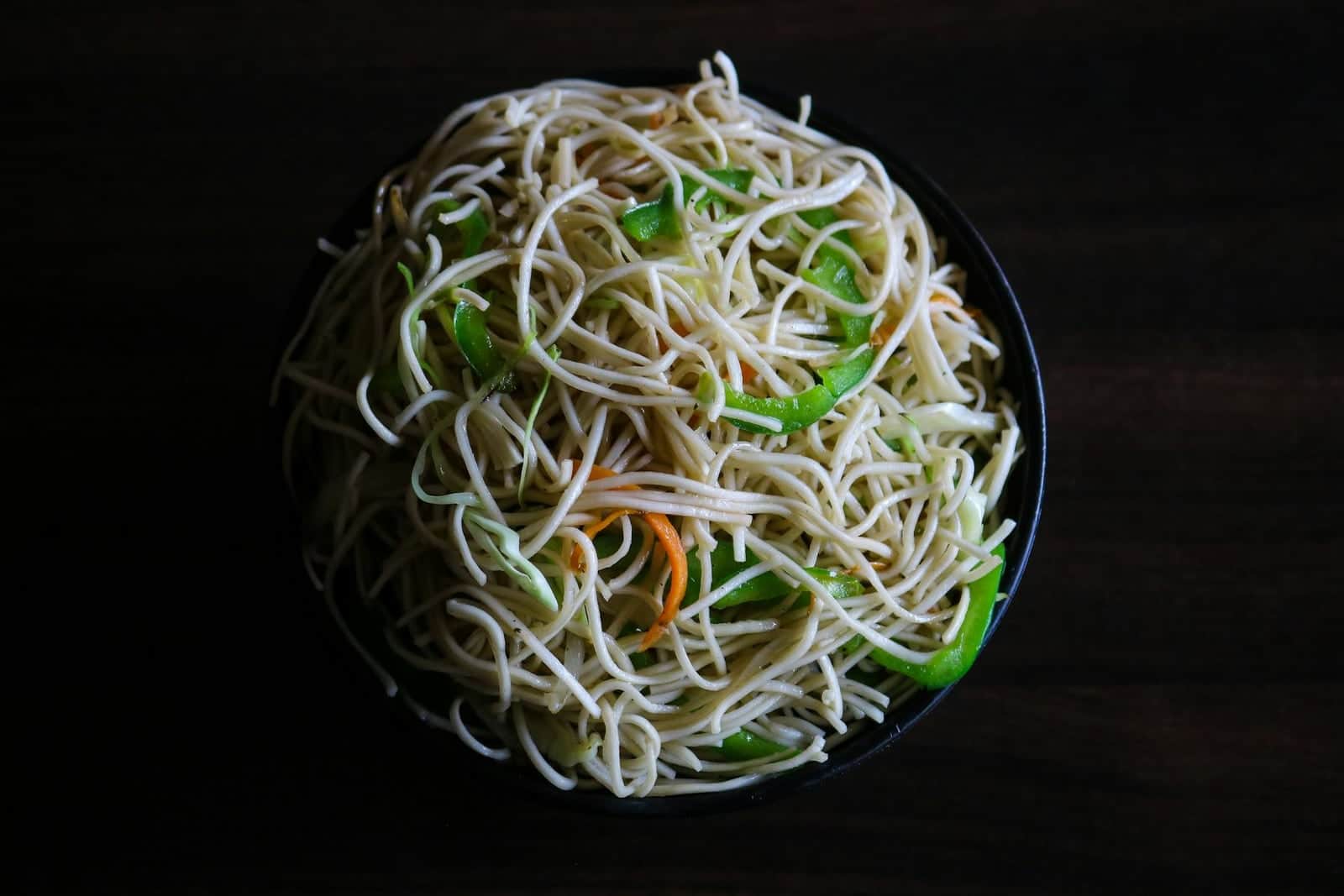
The hero image is reviewed against the dish title and alt text: Hakka noodles stir-fried with vegetables and served in a dark bowl. The page also includes 3 visual checkpoints.
Prep Time
10 min
Cook Time
10 min
Total Time
20 min
Servings
3
4 cups
Difficulty
Easy
Cost
Budget
$
Indo-Chinese stir-fried noodles with vegetables
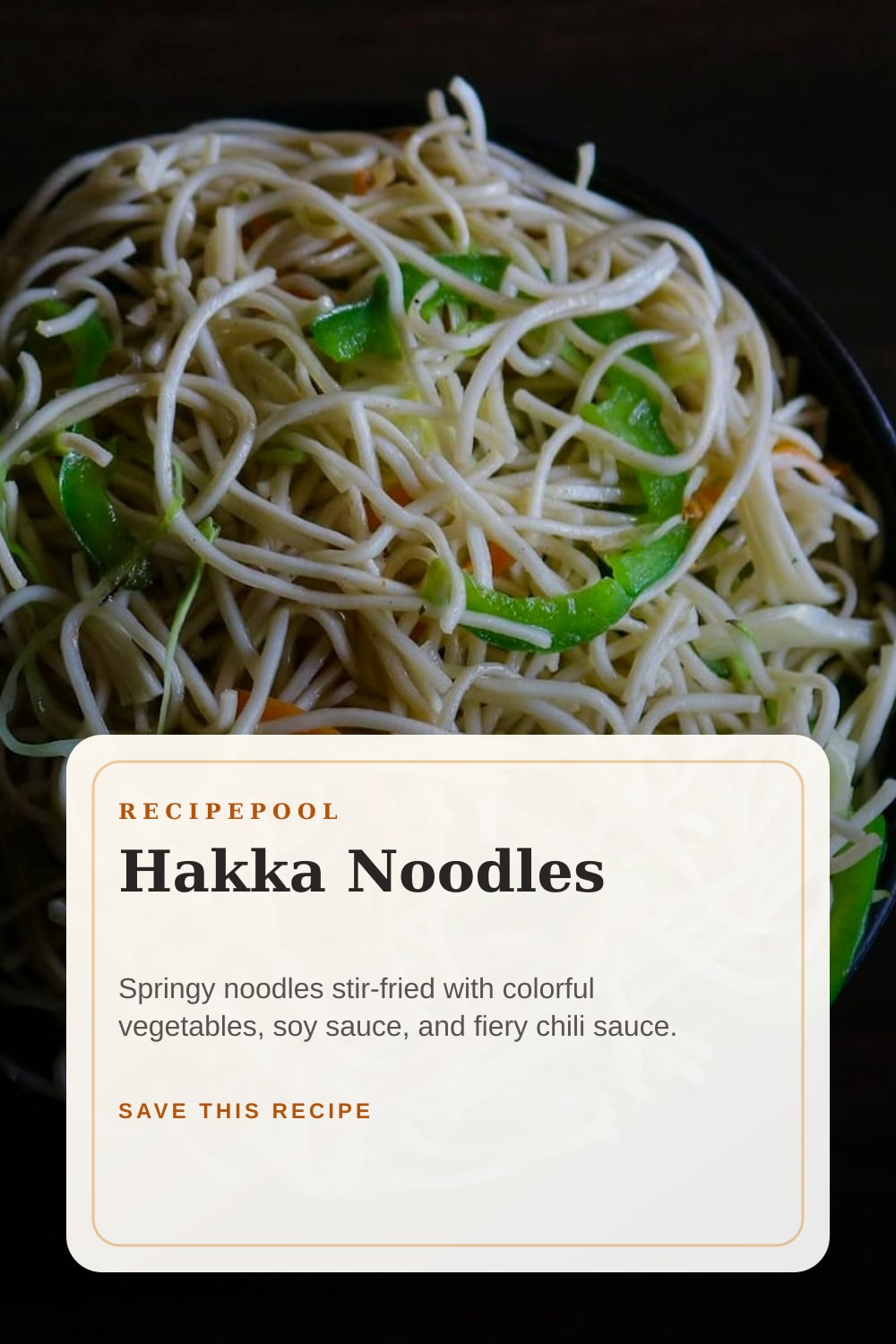
Springy noodles stir-fried with colorful vegetables, soy sauce, and fiery chili sauce. India's favorite Indo-Chinese noodle dish.
10m
Prep Time
10m
Cook Time
20m
Total Time
3
Servings
Easy
Difficulty
Budget $
Cost
Recipe by Priya Narayan
Reviewed by RecipePool Global Kitchen Desk
Editorially reviewed for image relevance, instruction clarity, ingredient fit, visual checkpoints, and practical home-cooking usefulness.
//
Hakka noodles are the backbone of Indo-Chinese cuisine—springy noodles wok-tossed with crunchy vegetables and a bold sauce of soy, chili, and vinegar. It is the most ordered noodle dish at Indian-Chinese restaurants.
Recipe-specific review checks
Last reviewed May 19, 2026 by RecipePool Global Kitchen Desk. The checks below are tied to this recipe's image, cooking method, and reader support sections.
The hero image is reviewed against the dish title and alt text: Hakka noodles stir-fried with vegetables and served in a dark bowl. The page also includes 3 visual checkpoints.
The instructions are supported by stovetop cues for a main course result, including timing, doneness, troubleshooting, and scaling guidance.
This page includes 2 tips, 2 recipe FAQs, and an editor note: Have everything prepped before the heat goes on for Hakka Noodles.
Kitchen intelligence
Before you start
Start by having hakka noodles or thin spaghetti, shredded cabbage, 1/2 cup julienned carrots, 1/2 cup sliced bell pepper, and soy sauce, 1 tbsp chili sauce, 1 tsp vinegar ready, then cook noodles al dente according to package, drain, toss with 1 tsp oil, and spread to cool.
Timing read
Plan for 10 minutes prep and 10 minutes cooking. Midway check: Add cabbage, carrots, and bell pepper; stir-fry 2 minutes keeping vegetables crunchy.
Flavor logic
hakka noodles or thin spaghetti, shredded cabbage, 1/2 cup julienned carrots, 1/2 cup sliced bell pepper, soy sauce, 1 tbsp chili sauce, 1 tsp vinegar, and garlic cloves minced, 1 inch ginger minced, 2 green chilies carry the main flavor and texture, so measure them before you adjust seasoning or heat.
Serving plan
For Indian and Main Course, the finish should match this final cue: Garnish with spring onion greens and serve immediately, optionally with extra chili sauce.
Visual checkpoints
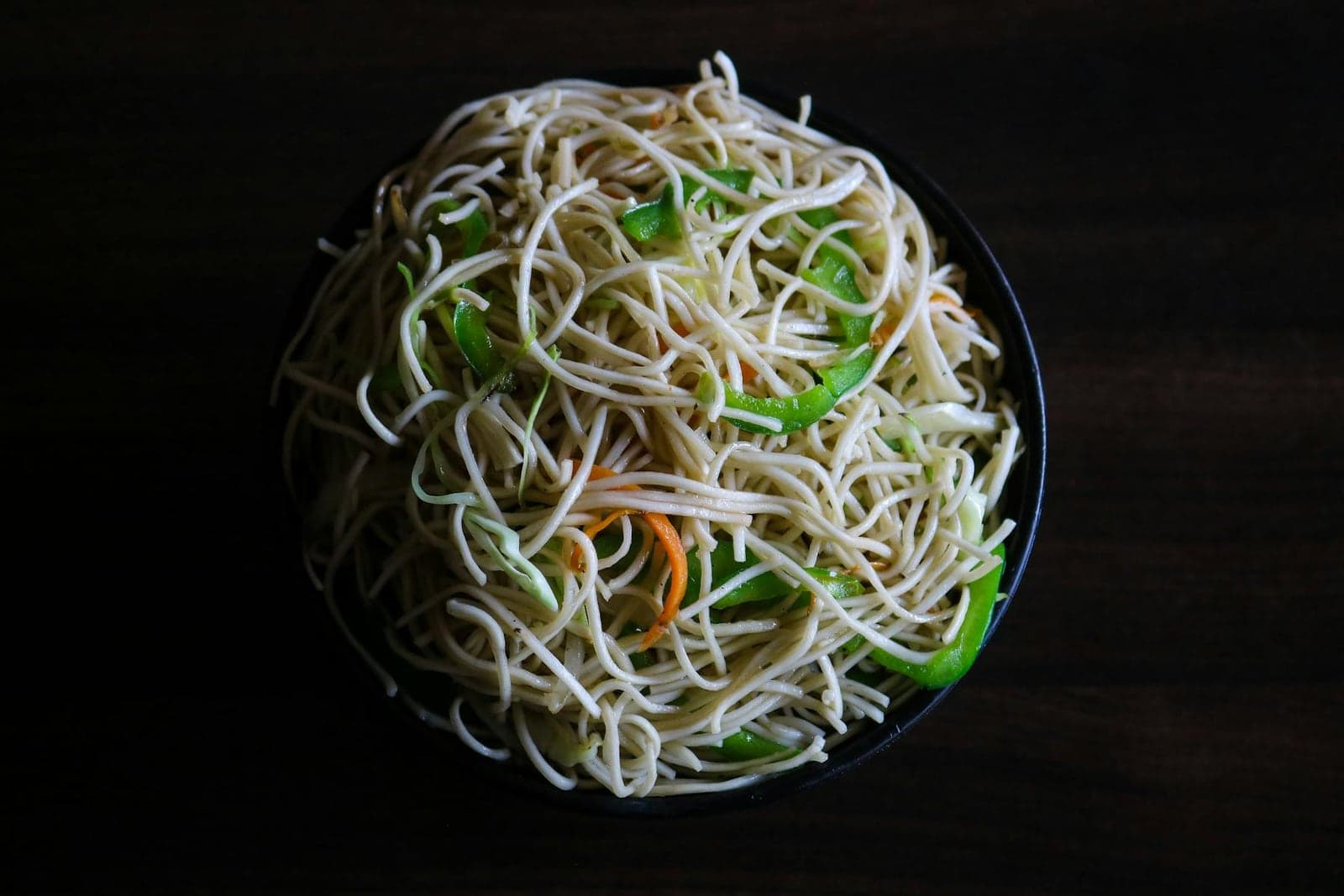
Hakka Noodles should look close to this before serving: clear color contrast, distinct texture, and a ready-to-eat finish.
Have 200g hakka noodles or thin spaghetti, 1 cup shredded cabbage, 1/2 cup julienned carrots, 1/2 cup sliced bell pepper, 3 tbsp soy sauce, 1 tbsp chili sauce, 1 tsp vinegar measured and ready before heat goes on. Cook noodles al dente according to package, drain, toss with 1 tsp oil, and spread to cool.
Garnish with spring onion greens and serve immediately, optionally with extra chili sauce.
Ingredient notes
Shopping focus
Hakka noodles or thin spaghetti, shredded cabbage, soy sauce, and garlic cloves minced carry most of the flavor. Spend attention there first.
Prep notes
Set up the ingredients in list order and keep time-sensitive items nearby.
Adjustment logic
If needed, use Thin spaghetti or rice noodles in place of Hakka noodles. Rice noodles make it gluten-free
Optional items
Keep the main items intact; use garnish, heat, or acidity for small adjustments.
Shopping guide
Buy first
Start shopping from the main ingredient list so the recipe structure stays intact.
Package check
Shredded cabbage may come in larger containers than needed; confirm amounts before buying backups.
Cost control
Use store brands, pantry staples, or simpler sides before changing the core ingredients.
Storage planning
Refrigerate for up to 2 days.
Useful Kitchen Picks
These are optional, recipe-relevant searches for tools or pantry staples that can make this specific recipe easier to repeat.
Helpful Pick
Saute Pan
Useful tool
Recipes like this come together better when there is room to toss pasta or noodles directly in the sauce instead of crowding a smaller skillet.
A wider pan makes the sauce-and-finish step much easier.
A large saute pan earns its keep quickly if pasta or noodle dishes are in regular rotation.
Shop saute pan options for this recipeHelpful Pick
Soy Sauce
Pantry upgrade
This is doing more than adding salt. The right soy sauce gives the recipe a rounder, more savory base than a thin generic bottle.
This pantry choice affects depth more than most seasonings here.
A better soy sauce is one of the easiest pantry upgrades for Asian cooking.
Shop soy sauce for this recipeAs an Amazon Associate I earn from qualifying purchases. Product links are included when they are directly relevant to the recipe.
Cook noodles al dente according to package, drain, toss with 1 tsp oil, and spread to cool.
Heat oil in a wok over highest heat; add garlic, ginger, green chilies, and spring onion whites.
Add cabbage, carrots, and bell pepper; stir-fry 2 minutes keeping vegetables crunchy.
Add noodles, soy sauce, chili sauce, and vinegar; toss vigorously using tongs for 2 minutes.
Garnish with spring onion greens and serve immediately, optionally with extra chili sauce.
Technique notes
Key method moments pulled from the written steps.
Prep phase
3 steps
Heat oil in a wok over highest heat; add garlic, ginger, green chilies, and spring onion whites.
Finish this step before adding ingredients or changing the heat.
Move on after this instruction is complete: heat oil in a wok over highest heat; add garlic, ginger, green chilies, and spring onion whites.
Finish phase
2 steps
Garnish with spring onion greens and serve immediately, optionally with extra chili sauce.
Add toppings after cooking so fresh, crunchy, or acidic finishes stay distinct.
Plate while the main dish is still hot, then add crunchy, acidic, or fresh garnishes right before serving.
Doneness cues
Look for
Garnish with spring onion greens and serve immediately, optionally with extra chili sauce.
Heat cue
If the surface is changing too fast before the center or sauce is ready, lower the heat and give the recipe time to catch up.
Timing cue
Use the 10 minutes prep window to get organized so the cooking stage can move without rushed substitutions.
Final adjustment
Have everything prepped before the heat goes on for Hakka Noodles.
Troubleshooting
Texture check
Check this step before adding heat or liquid: Add cabbage, carrots, and bell pepper; stir-fry 2 minutes keeping vegetables crunchy.
Timing check
Hakka Noodles starts with about 10 minutes prep. Steady heat and small adjustments are usually enough.
Seasoning check
Before changing seasoning, check this tip: Have everything prepped before you start cooking—the stir-fry happens in under 5 minutes.
Leftover check
Stir-fry in a hot wok with a splash of soy sauce to refresh.
Scaling guide
Half batch
For Hakka Noodles, halve the main ingredients evenly and season lightly until the final taste check.
Double batch
For Hakka Noodles, use a wider pan, larger pot, or second tray so the short ingredient list has room.
Timing changes
Cook time starts around 10 minutes; prep starts around 10 minutes.
Leftover math
Refrigerate for up to 2 days.
Make-ahead timeline
Earlier in the day
Start with this setup step: Cook noodles al dente according to package, drain, toss with 1 tsp oil, and spread to cool.
Before serving
Hakka Noodles moves quickly, so avoid starting until the table, sides, and serving pieces are close to ready.
Leftover plan
Refrigerate for up to 2 days.
Reheat without damage
Stir-fry in a hot wok with a splash of soy sauce to refresh.
Serve with warm naan bread or basmati rice
Top with fresh cilantro and a squeeze of lime
Pair with a cooling cucumber raita on the side
Meal fit
Meal role
Pair this main course with sides that add contrast: crisp, fresh, acidic, or starchy as needed.
Best timing
Low-friction timing for Hakka Noodles. Add a small buffer if serving guests.
Diet fit
Keep the sides aligned with vegetarian: vegetables, grains, sauces, or garnishes should follow the same constraint.
Occasion fit
Good for weeknight dinner when sides can be handled while the main recipe cooks.
Rice noodles make it gluten-free
Gluten-free alternative with similar flavor
Have everything prepped before you start cooking—the stir-fry happens in under 5 minutes.
Use the highest heat possible and do not overcrowd the wok for the best results.
Refrigerate for up to 2 days. Noodles firm up but reheat well.
Stir-fry in a hot wok with a splash of soy sauce to refresh.
Have everything prepped before the heat goes on for Hakka Noodles. The pan moves fast once you start.
Per serving (0mg) · 3 servings
A moderate-calorie serving · based on a 2,000 cal daily diet
Nutritional values are approximate and may vary based on specific ingredients and preparation methods.
Tell us what was unclear, what you changed, or what needs another look in Hakka Noodles.
Keep Browsing
Follow the ingredients, cooking style, or curated collections that connect naturally to Hakka Noodles.
Hakka Noodles is kept in the public catalog after review for image relevance, ingredient fit, instruction clarity, and practical page quality.