Image relevance check
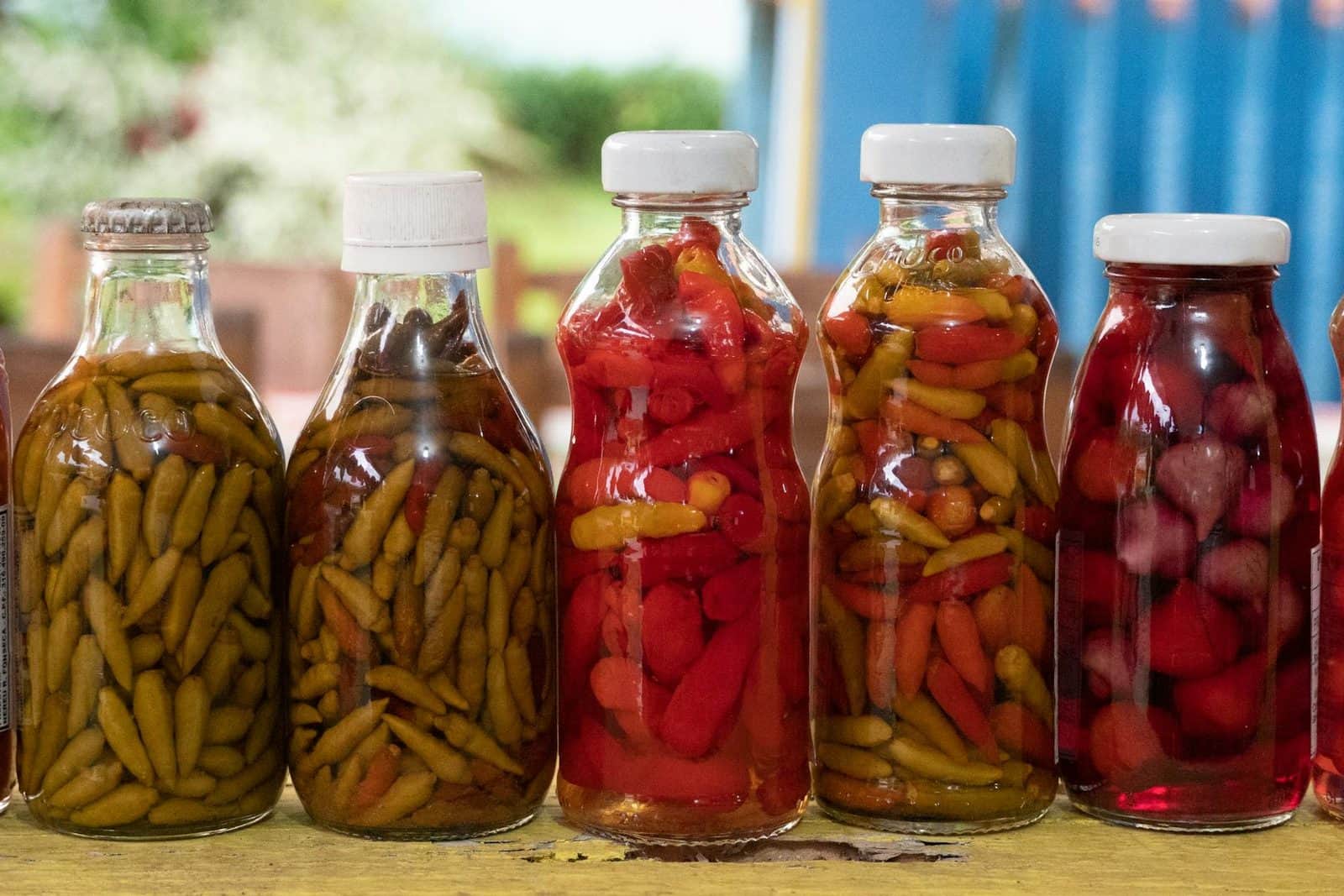
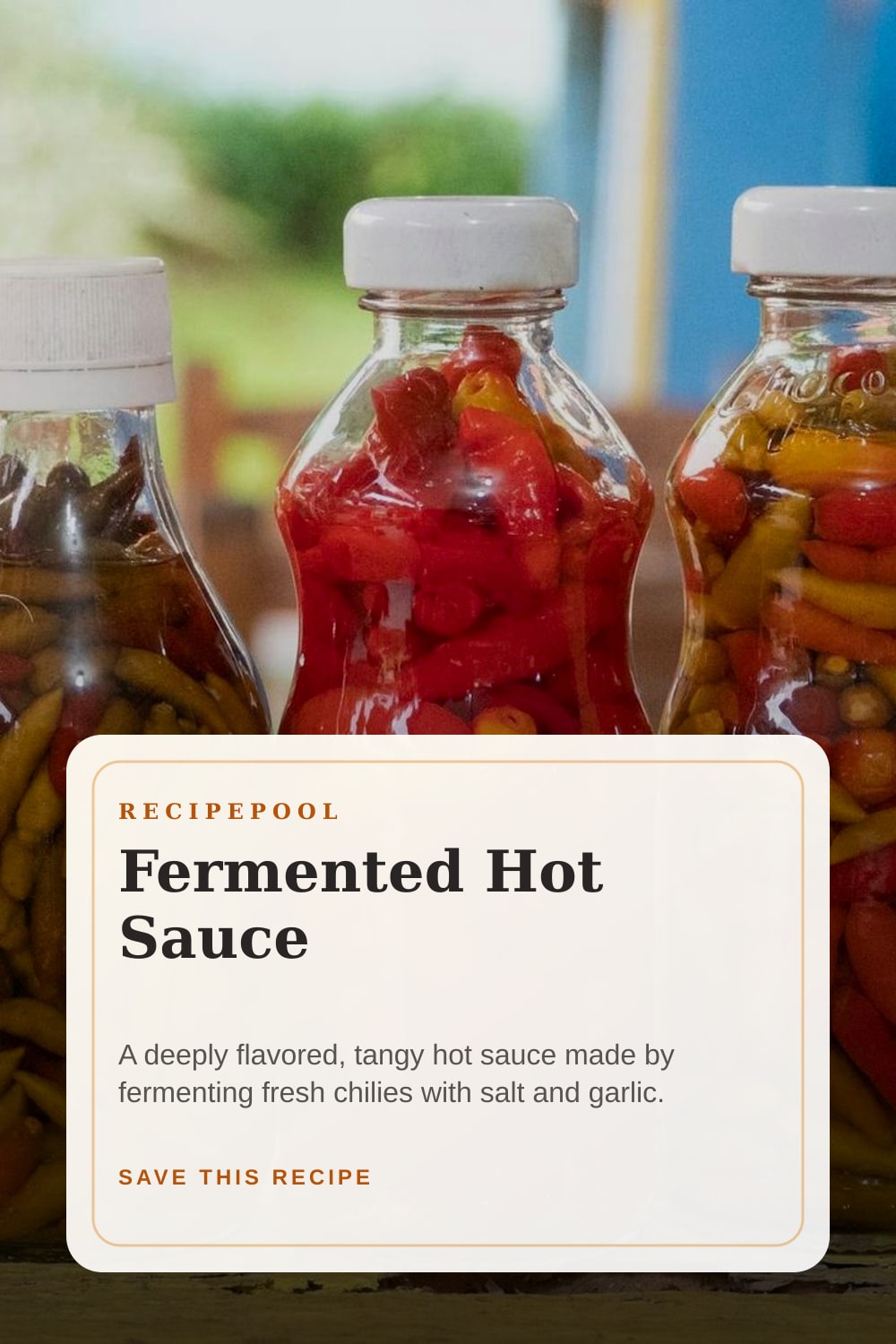
The hero image is reviewed against the dish title and alt text: Fermented hot sauce peppers packed in glass bottles with red, green, and yellow chiles. The page also includes 3 visual checkpoints.
Prep Time
20 min
Cook Time
0 min
Total Time
168 hr 20 min
Servings
32
2 cups
Difficulty
Medium
Cost
Budget
$
Tangy, complex lacto-fermented chili sauce
A deeply flavored, tangy hot sauce made by fermenting fresh chilies with salt and garlic. Fermentation develops complex, rounded heat that is more nuanced than any store-bought sauce.
20m
Prep Time
0m
Cook Time
10100m
Total Time
32
Servings
Medium
Difficulty
Budget $
Cost
Recipe by Sarah Chen
Reviewed by RecipePool Weeknight Dinner Desk
Editorially reviewed for image relevance, instruction clarity, ingredient fit, visual checkpoints, and practical home-cooking usefulness.
//
Fermented hot sauce is how many of the world's best hot sauces are made—think Tabasco and sriracha. The fermentation process transforms raw chilies into a complex, tangy, umami-rich sauce.
Recipe-specific review checks
Last reviewed May 20, 2026 by RecipePool Weeknight Dinner Desk. The checks below are tied to this recipe's image, cooking method, and reader support sections.
The hero image is reviewed against the dish title and alt text: Fermented hot sauce peppers packed in glass bottles with red, green, and yellow chiles. The page also includes 3 visual checkpoints.
The instructions are supported by no-cook cues for a side dish result, including timing, doneness, troubleshooting, and scaling guidance.
This page includes 2 tips, 2 recipe FAQs, and an editor note: Taste Fermented Hot Sauce after mixing and again after a short rest.
Kitchen intelligence
Before you start
Start by having fresh hot peppers (mix of habanero, jalapeno, serrano), garlic, peeled, and kosher salt ready, then roughly chop peppers and garlic.
Timing read
Plan for 20 minutes prep and 0 minutes cooking. Midway check: Weigh down the peppers with a weight to keep them under the brine.
Flavor logic
fresh hot peppers (mix of habanero, jalapeno, serrano), garlic, peeled, kosher salt, and filtered water carry the main flavor and texture, so measure them before you adjust seasoning or heat.
Serving plan
For Side Dish, the finish should match this final cue: Blend the fermented peppers with their brine and vinegar until smooth.
Visual checkpoints
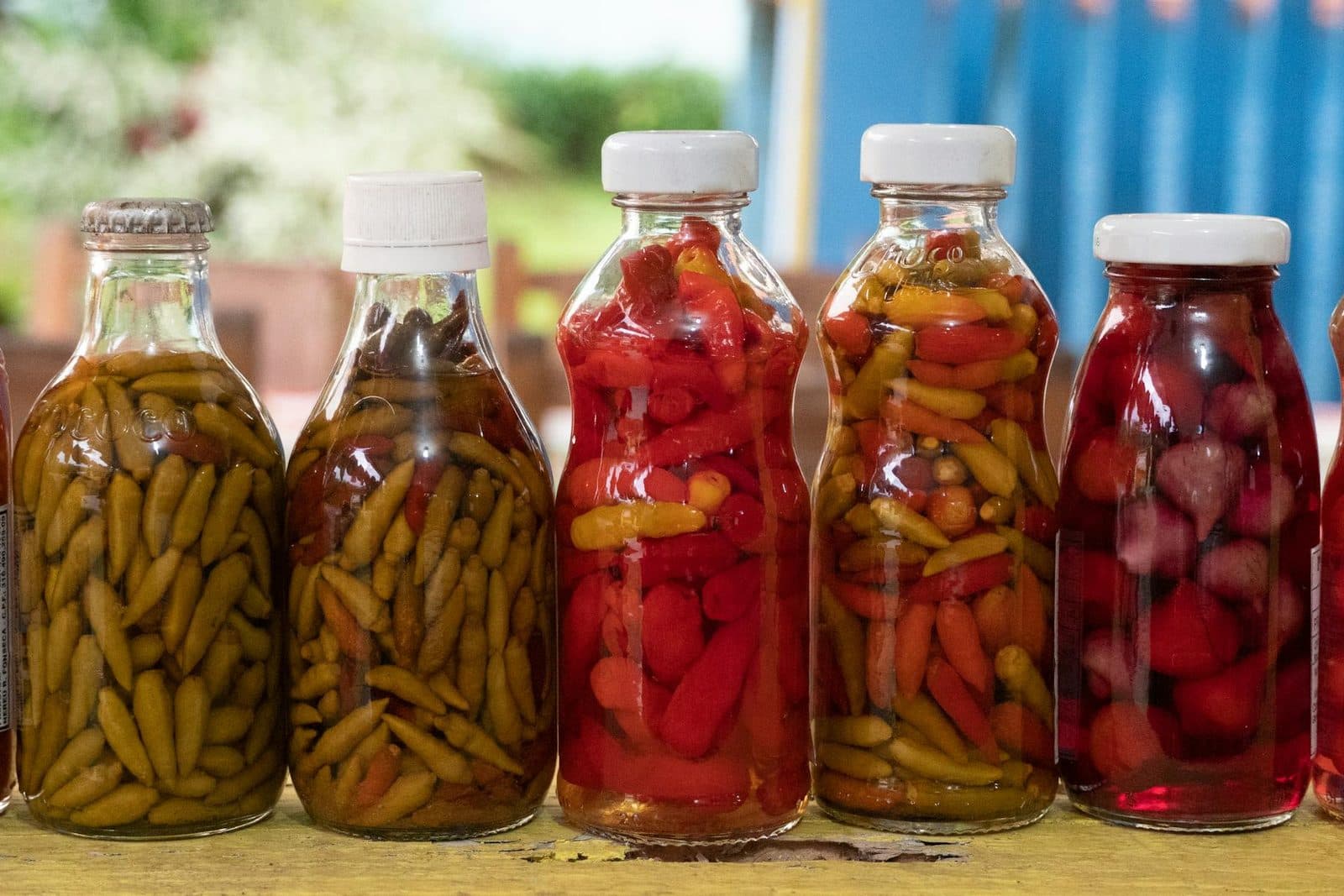
Fermented Hot Sauce should look close to this before serving: clear color contrast, distinct texture, and a ready-to-eat finish.
Have 1 lb fresh hot peppers (mix of habanero, jalapeno, serrano), 6 cloves garlic, peeled, 2 tbsp kosher salt measured and ready before heat goes on. Roughly chop peppers and garlic.
Blend the fermented peppers with their brine and vinegar until smooth.
Ingredient notes
Shopping focus
Fresh hot peppers (mix of habanero, garlic, kosher salt, and filtered water carry most of the flavor. Spend attention there first.
Prep notes
Set up the ingredients in list order and keep time-sensitive items nearby.
Adjustment logic
If needed, use All jalapenos (milder) or all habaneros (very hot) in place of Mixed hot peppers. Customize heat to your preference
Optional items
Keep the main items intact; use garnish, heat, or acidity for small adjustments.
Shopping guide
Buy first
Start shopping from the main ingredient list so the recipe structure stays intact.
Package check
Filtered water, distilled white vinegar (after fermentation), and clean glass jar with airlock or loose lid may come in larger containers than needed; confirm amounts before buying backups.
Cost control
Use store brands, pantry staples, or simpler sides before changing the core ingredients.
Storage planning
Refrigerate in bottles for up to 1 year.
Roughly chop peppers and garlic. Place in a clean jar.
Dissolve salt in water to make a 3.5% brine. Pour over the peppers, ensuring they are fully submerged.
Weigh down the peppers with a weight to keep them under the brine. Cover with an airlock or loose lid.
Ferment at room temperature for 5-7 days, burping the jar daily if using a regular lid. The brine will bubble and turn cloudy.
Blend the fermented peppers with their brine and vinegar until smooth. Strain for a thinner sauce and bottle.
Technique notes
Key method moments pulled from the written steps.
Prep phase
3 steps
Dissolve salt in water to make a 3.5% brine.
Final seasoning should happen after the main ingredients have cooked together, when the balance is easiest to judge.
Move on after this instruction is complete: dissolve salt in water to make a 3.5% brine.
Finish phase
2 steps
Blend the fermented peppers with their brine and vinegar until smooth.
Mix until the sauce or seasoning looks consistent before moving on.
Move on after this instruction is complete: blend the fermented peppers with their brine and vinegar until smooth.
Doneness cues
Look for
Blend the fermented peppers with their brine and vinegar until smooth.
Heat cue
If the surface is changing too fast before the center or sauce is ready, lower the heat and give the recipe time to catch up.
Timing cue
Use the 20 minutes prep window to get organized so the cooking stage can move without rushed substitutions.
Final adjustment
Taste Fermented Hot Sauce after mixing and again after a short rest.
Troubleshooting
Texture check
Check this step before adding heat or liquid: Weigh down the peppers with a weight to keep them under the brine.
Timing check
Fermented Hot Sauce starts with about 20 minutes prep. Watch texture and seasoning at the midpoint.
Seasoning check
Before changing seasoning, check this tip: Use gloves when handling hot peppers—capsaicin burns can last for hours.
Leftover check
Not applicable—use as a condiment at any temperature.
Scaling guide
Half batch
For Fermented Hot Sauce, halve the main ingredients evenly and season lightly until the final taste check.
Double batch
For Fermented Hot Sauce, use a wider pan, larger pot, or second tray so the short ingredient list has room.
Timing changes
Cook time starts around 0 minutes; prep starts around 20 minutes.
Leftover math
Refrigerate in bottles for up to 1 year.
Make-ahead timeline
Earlier in the day
Start with this setup step: Roughly chop peppers and garlic.
Before serving
Plan around 20 minutes of prep and 0 minutes of cooking so the final step lands near serving time.
Leftover plan
Refrigerate in bottles for up to 1 year.
Reheat without damage
Not applicable—use as a condiment at any temperature.
Serve with a fresh side salad for a balanced meal
Pair with your favorite grain or bread on the side
Garnish with fresh herbs for a beautiful presentation
Meal fit
Meal role
Pair this side dish with sides that add contrast: crisp, fresh, acidic, or starchy as needed.
Best timing
Moderately involved timing for Fermented Hot Sauce. Add a small buffer if serving guests.
Diet fit
Keep the sides aligned with vegan and gluten-free: vegetables, grains, sauces, or garnishes should follow the same constraint.
Occasion fit
Good for meal prep when sides can be handled while the main recipe cooks.
Customize heat to your preference
Adds a slightly fruitier, more complex flavor
Use gloves when handling hot peppers—capsaicin burns can last for hours.
Ferment longer (up to 2-3 weeks) for more complex, tangier flavor.
Refrigerate in bottles for up to 1 year. The vinegar acts as a preservative.
Not applicable—use as a condiment at any temperature.
Taste Fermented Hot Sauce after mixing and again after a short rest. Salt and acid read differently once the flavors settle.
Per serving (0mg) · 32 servings
A light, low-calorie option · based on a 2,000 cal daily diet
Nutritional values are approximate and may vary based on specific ingredients and preparation methods.
Tell us what was unclear, what you changed, or what needs another look in Fermented Hot Sauce.
Keep Browsing
Follow the ingredients, cooking style, or curated collections that connect naturally to Fermented Hot Sauce.
Fermented Hot Sauce is kept in the public catalog after review for image relevance, ingredient fit, instruction clarity, and practical page quality.