Image relevance check
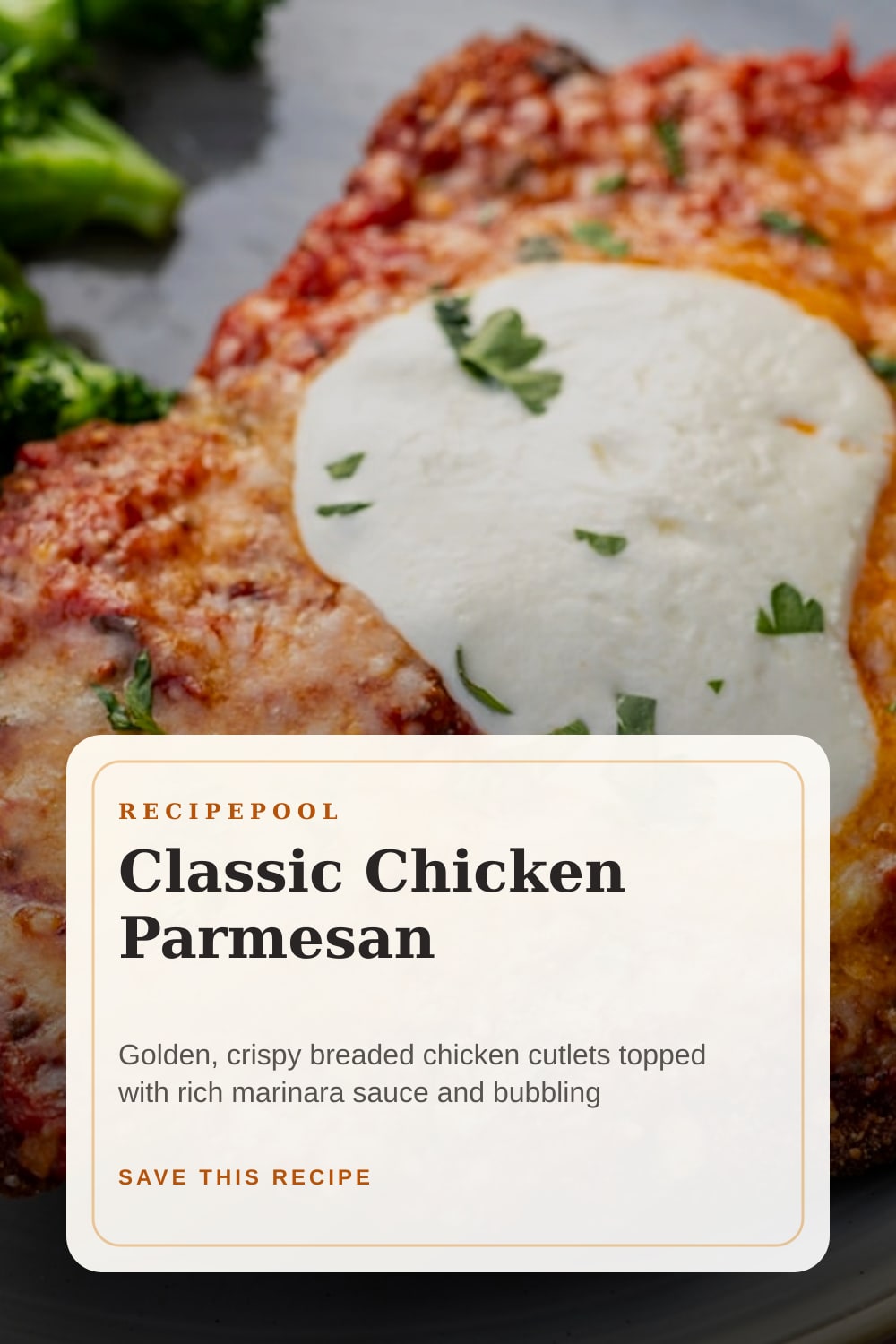
The hero image is reviewed against the dish title and alt text: Classic chicken parmesan cutlet with melted mozzarella, marinara, and broccoli. The page also includes 3 visual checkpoints.
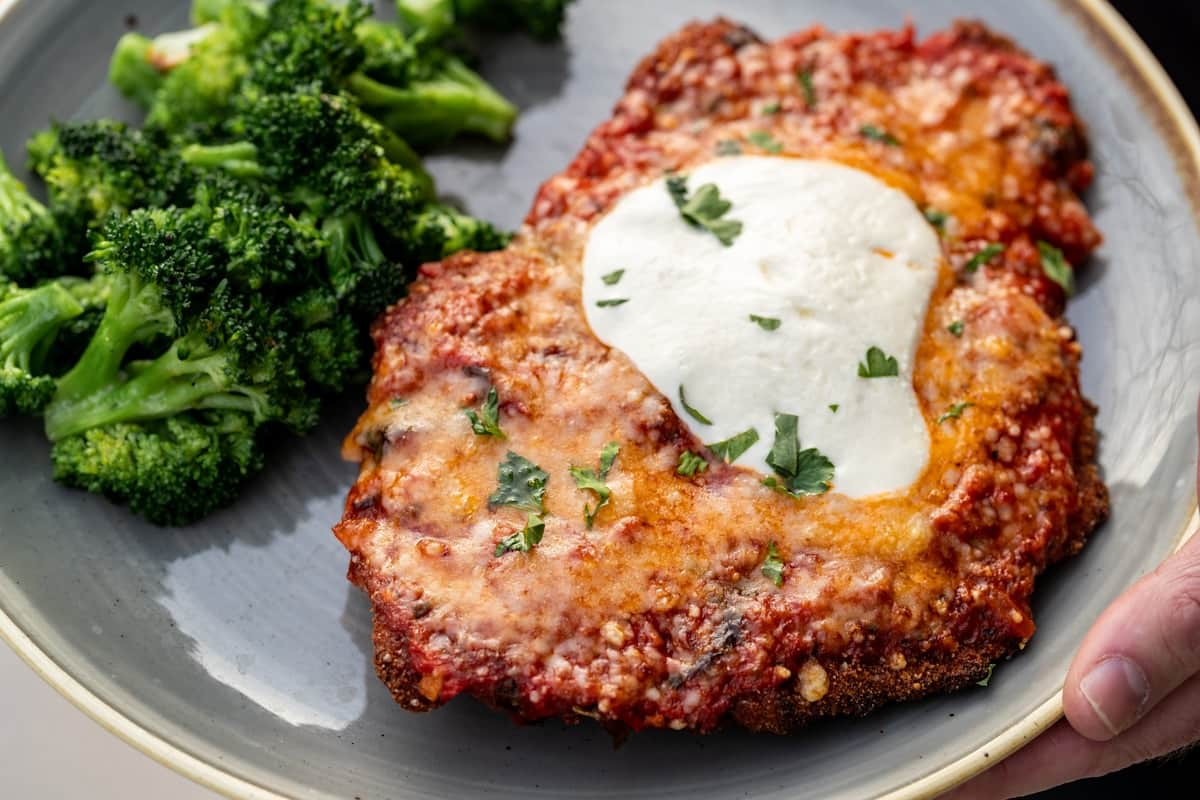
Crispy breaded chicken smothered in marinara and melted mozzarella
Photo: RecipePool
SavePrep Time
20 min
Cook Time
25 min
Total Time
45 min
Servings
4
4 chicken cutlets
Difficulty
Medium
Cost
Moderate
$$
Crispy breaded chicken smothered in marinara and melted mozzarella
Golden, crispy breaded chicken cutlets topped with rich marinara sauce and bubbling mozzarella cheese. This Italian-American classic is a guaranteed crowd-pleaser.
20m
Prep Time
25m
Cook Time
45m
Total Time
4
Servings
Medium
Difficulty
Moderate $$
Cost
Recipe by Luca Romano
Reviewed by RecipePool Mediterranean & Fresh Desk
Editorially reviewed for image relevance, instruction clarity, ingredient fit, visual checkpoints, and practical home-cooking usefulness.
//
There are few dishes more universally loved than a well-made chicken parmesan. The combination of a shatteringly crisp breadcrumb crust, tender chicken breast, tangy marinara, and stretchy melted mozzarella hits every comfort food note imaginable. It is the kind of recipe that earns a permanent spot in your weeknight rotation.
This version gets the details right. We pound the chicken thin so it cooks evenly, use a three-step breading process for maximum crunch, and finish under the broiler so the cheese gets that irresistible golden-brown blistering on top. The marinara is simple — canned San Marzano tomatoes, garlic, and fresh basil — because the best sauce lets quality ingredients speak for themselves.
Serve it over a bed of spaghetti, alongside a crisp green salad, or tucked into a crusty sub roll for chicken parm sandwiches. However you plate it, this is the definitive recipe you will come back to again and again.
Recipe-specific review checks
Last reviewed May 5, 2026 by RecipePool Mediterranean & Fresh Desk. The checks below are tied to this recipe's image, cooking method, and reader support sections.
The hero image is reviewed against the dish title and alt text: Classic chicken parmesan cutlet with melted mozzarella, marinara, and broccoli. The page also includes 3 visual checkpoints.
The instructions are supported by stovetop and oven cues for a main course result, including timing, doneness, troubleshooting, and scaling guidance.
This page includes 4 tips, 4 recipe FAQs, and an editor note: Read through Classic Chicken Parmesan once before you start.
Kitchen intelligence
Before you start
Start by having boneless, skinless chicken breasts (about 6 oz each), marinara sauce, and all-purpose flour ready, then preheat your oven to 425°F (220°C).
Timing read
Plan for 20 minutes prep and 25 minutes cooking. Midway check: A wire rack keeps the bottom crust from getting soggy.
Flavor logic
boneless, skinless chicken breasts (about 6 oz each), marinara sauce, all-purpose flour, and fresh mozzarella, sliced carry the main flavor and texture, so measure them before you adjust seasoning or heat.
Serving plan
For Italian and American, the finish should match this final cue: Remove from the oven and let rest for 2-3 minutes.
Visual checkpoints
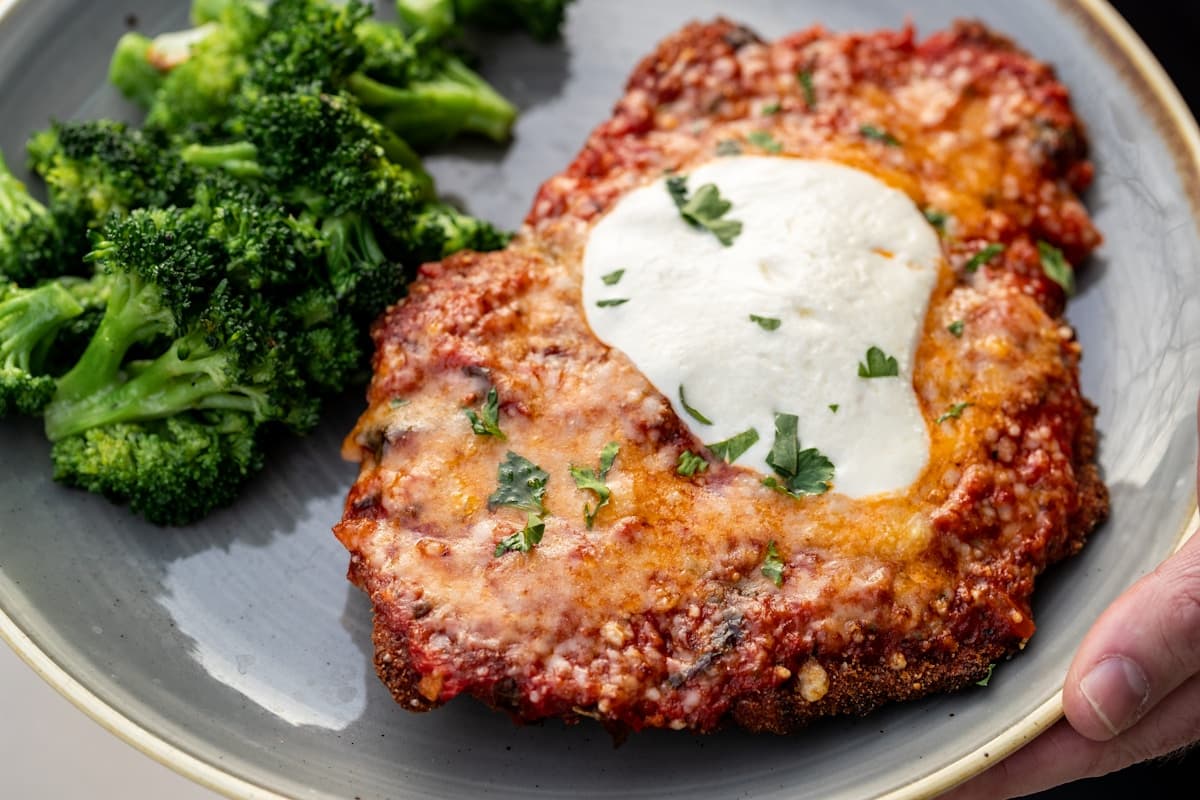
Classic Chicken Parmesan should look close to this before serving: clear color contrast, distinct texture, and a ready-to-eat finish.
Have 4 boneless, skinless chicken breasts (about 6 oz each), 2 cups marinara sauce, 1 cup all-purpose flour measured and ready before heat goes on. Preheat your oven to 425°F (220°C).
Remove from the oven and let rest for 2-3 minutes.
Ingredient notes
The list is organized around chicken and topping & sauce, which is the same order the cooking process expects.
Shopping focus
Boneless, marinara sauce, all-purpose flour, and fresh mozzarella carry most of the flavor. Spend attention there first.
Prep notes
Boneless pounded to 1/2-inch thickness, fresh mozzarella sliced into rounds, and eggs beaten before heat goes on.
Adjustment logic
If needed, use Chicken thighs (boneless, skinless) in place of Chicken breast. Thighs are more forgiving and stay juicier. Pound to even thickness.
Optional items
Keep the main items intact; use garnish, heat, or acidity for small adjustments.
Shopping guide
Buy first
Boneless, eggs, and freshly grated Parmesan cheese are the ingredients most likely to affect freshness and texture.
Package check
Boneless, marinara sauce, and all-purpose flour may come in larger containers than needed; confirm amounts before buying backups.
Cost control
Use store brands, pantry staples, or simpler sides before changing the core ingredients.
Storage planning
Store leftover chicken parmesan in an airtight container in the refrigerator for up to 3 days.
Useful Kitchen Picks
These are optional, recipe-relevant searches for tools or pantry staples that can make this specific recipe easier to repeat.
Helpful Pick
Sheet Pan
Useful tool
The pan is doing more work here than it looks like. A sturdy, evenly heating sheet pan gives you better browning and fewer hot spots.
This recipe benefits from more even oven contact and easier cleanup.
A heavy rimmed sheet pan is one of the highest-use tools in almost any kitchen.
Shop sheet pan options for this recipeHelpful Pick
Olive Oil
Pantry upgrade
On recipes like this, olive oil is not just a background fat. A better bottle gives you cleaner flavor and a better finish.
This is a pantry upgrade you can keep using across similar recipes.
A good bottle of olive oil is one of the safest pantry upgrades for Mediterranean and Italian cooking.
Shop olive oil for this recipeAs an Amazon Associate I earn from qualifying purchases. Product links are included when they are directly relevant to the recipe.
Preheat your oven to 425°F (220°C). Line a rimmed baking sheet with parchment paper or a wire rack set inside a baking sheet.
Note:A wire rack keeps the bottom crust from getting soggy.
Place each chicken breast between two sheets of plastic wrap and pound with a meat mallet or rolling pin to an even 1/2-inch thickness. Season both sides generously with salt and pepper.
Set up a three-station breading line: flour seasoned with salt and pepper in the first shallow dish, beaten eggs in the second, and breadcrumbs mixed with grated Parmesan and garlic powder in the third.
Dredge each chicken breast in flour, shaking off the excess. Dip into the egg, letting the excess drip off. Press firmly into the breadcrumb mixture, coating both sides evenly.
Note:Press the breadcrumbs on firmly — a tight seal means a crispier crust.
Heat the olive oil in a large oven-safe skillet over medium-high heat until shimmering. Fry the breaded chicken in batches, about 3 minutes per side, until deep golden brown.
Note:Do not crowd the pan or the temperature will drop and the coating will steam instead of crisp.
Transfer the fried cutlets to the prepared baking sheet. Spoon marinara sauce over each cutlet and top with sliced fresh mozzarella.
Bake in the preheated oven for 10 minutes until the cheese is melted and bubbly. For extra browning, switch the broiler to high for the last 2 minutes.
Note:Watch carefully under the broiler — it can go from perfectly browned to burnt in seconds.
Remove from the oven and let rest for 2-3 minutes. Garnish with fresh basil leaves and serve immediately over spaghetti or with a side salad.
Technique notes
Key method moments pulled from the written steps.
Prep phase
3 steps
Preheat your oven to 425°F (220°C).
Finish this step before adding ingredients or changing the heat.
A wire rack keeps the bottom crust from getting soggy.
Cook phase 1
3 steps
Dredge each chicken breast in flour, shaking off the excess.
Finish this step before adding ingredients or changing the heat.
Press the breadcrumbs on firmly — a tight seal means a crispier crust.
Finish phase
2 steps
Bake in the preheated oven for 10 minutes until the cheese is melted and bubbly.
The oven stage sets texture and color; check browning and tenderness because pan size and ingredient thickness can shift the finish.
Watch carefully under the broiler — it can go from perfectly browned to burnt in seconds.
Doneness cues
Look for
A wire rack keeps the bottom crust from getting soggy.
Heat cue
Use the written temperature as the anchor, then confirm by texture before serving Classic Chicken Parmesan.
Timing cue
The clearest timed instruction is: Heat the olive oil in a large oven-safe skillet over medium-high heat until shimmering.
Final adjustment
Read through Classic Chicken Parmesan once before you start.
Troubleshooting
Texture check
Check this step before adding heat or liquid: A wire rack keeps the bottom crust from getting soggy.
Timing check
Classic Chicken Parmesan starts with about 20 minutes prep. Watch texture and seasoning at the midpoint.
Seasoning check
Before changing seasoning, check this tip: Pounding the chicken evenly is the single most important step — uneven cutlets mean some parts overcook while others stay raw.
Leftover check
For the crispiest results, reheat in a 375°F oven for 12-15 minutes until heated through and the cheese is bubbly again.
Scaling guide
Half batch
For Classic Chicken Parmesan, halve the main ingredients evenly and season lightly until the final taste check.
Double batch
For Classic Chicken Parmesan, use a wider pan, larger pot, or second tray so the moderate ingredient list has room.
Timing changes
Cook time starts around 25 minutes; prep starts around 20 minutes.
Leftover math
Store leftover chicken parmesan in an airtight container in the refrigerator for up to 3 days.
Make-ahead timeline
Earlier in the day
Start with this setup step: Preheat your oven to 425°F (220°C).
Before serving
Plan around 20 minutes of prep and 25 minutes of cooking so the final step lands near serving time.
Leftover plan
Store leftover chicken parmesan in an airtight container in the refrigerator for up to 3 days.
Reheat without damage
For the crispiest results, reheat in a 375°F oven for 12-15 minutes until heated through and the cheese is bubbly again.
Serve with crusty artisan bread for dipping
Finish with a drizzle of high-quality extra virgin olive oil
Pair with a simple arugula salad dressed in lemon vinaigrette
Serve with classic coleslaw and cornbread on the side
Meal fit
Meal role
Pair this main course with sides that add contrast: crisp, fresh, acidic, or starchy as needed.
Best timing
Moderately involved timing for Classic Chicken Parmesan. Add a small buffer if serving guests.
Diet fit
Stay in the italian and american lane with sides and condiments.
Occasion fit
Good for weeknight dinner and date night when sides can be handled while the main recipe cooks.
Thighs are more forgiving and stay juicier. Pound to even thickness.
Panko creates an even crunchier texture.
Melts differently but still delicious. Low-moisture browns better under the broiler.
Pounding the chicken evenly is the single most important step — uneven cutlets mean some parts overcook while others stay raw.
Let the breaded chicken rest on a rack for 5-10 minutes before frying. This helps the coating adhere better during cooking.
Use a thermometer to check the oil temperature — 350°F is ideal for frying the cutlets.
For a lighter version, you can bake the breaded cutlets at 425°F on a rack for 20 minutes, flipping halfway, instead of pan-frying.
Store leftover chicken parmesan in an airtight container in the refrigerator for up to 3 days. For best results, store the sauce and chicken separately to keep the breading from getting soggy. Fully assembled chicken parm can be frozen for up to 2 months — wrap individual portions tightly in plastic wrap and then aluminum foil.
For the crispiest results, reheat in a 375°F oven for 12-15 minutes until heated through and the cheese is bubbly again. You can also use an air fryer at 350°F for 5-7 minutes. Avoid the microwave if possible, as it will make the breading soft and chewy.
Read through Classic Chicken Parmesan once before you start. The method timing is a guide—texture and seasoning matter more than the clock.
Per serving (1 cutlet with sauce and cheese) · 4 servings
A hearty, energy-rich serving · based on a 2,000 cal daily diet
Nutritional values are approximate and may vary based on specific ingredients and preparation methods.
Tell us what was unclear, what you changed, or what needs another look in Classic Chicken Parmesan.
Keep Browsing
Follow the ingredients, cooking style, or curated collections that connect naturally to Classic Chicken Parmesan.
Classic Chicken Parmesan is kept in the public catalog after review for image relevance, ingredient fit, instruction clarity, and practical page quality.
Photo: RecipePool