Image relevance check
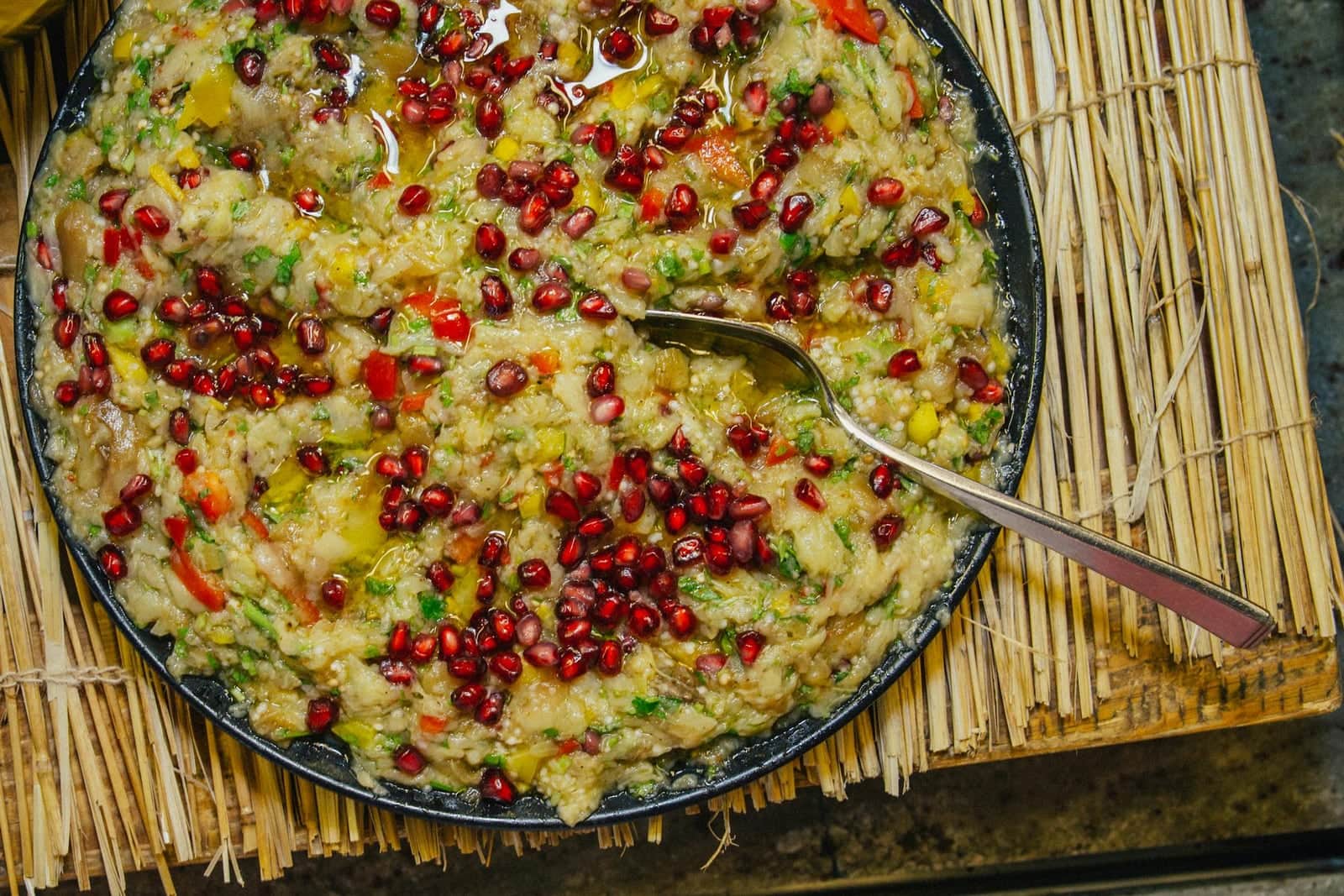
The hero image is reviewed against the dish title and alt text: Baba ganoush eggplant dip garnished with pomegranate seeds and herbs. The page also includes 3 visual checkpoints.
Prep Time
10 min
Cook Time
35 min
Total Time
45 min
Servings
6
About 2 cups
Difficulty
Easy
Cost
Budget
$
Smoky roasted eggplant dip with tahini, lemon, and garlic
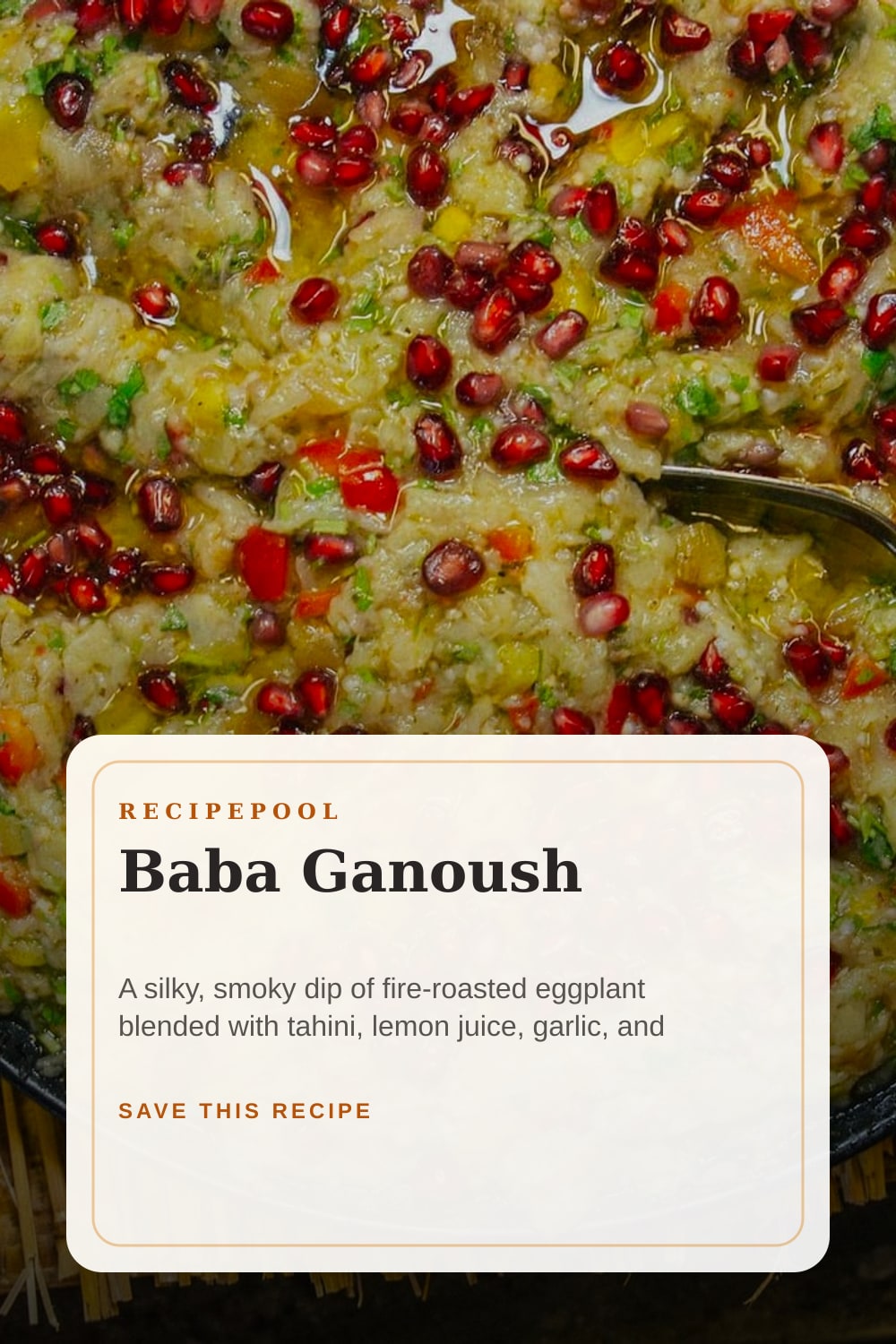
A silky, smoky dip of fire-roasted eggplant blended with tahini, lemon juice, garlic, and olive oil. The Middle Eastern classic that rivals hummus in popularity.
10m
Prep Time
35m
Cook Time
45m
Total Time
6
Servings
Easy
Difficulty
Budget $
Cost
Recipe by Hannah Okoye
Reviewed by RecipePool Mediterranean & Fresh Desk
Editorially reviewed for image relevance, instruction clarity, ingredient fit, visual checkpoints, and practical home-cooking usefulness.
//
Baba ganoush is the smoky, sultry sibling of hummus. While hummus gets all the fame, many in the Middle East would argue that baba ganoush — with its smoky roasted eggplant, nutty tahini, and bright lemon — is the superior dip.
The secret is the eggplant. It must be roasted until completely collapsed and the skin is blackened and charred. This charring is not optional — it is what gives baba ganoush its signature smoky flavor. The flesh inside becomes silky and sweet, collapsing into a puree that is the perfect canvas for tahini, garlic, and lemon.
Served with warm pita bread, raw vegetables, or as part of a mezze spread, baba ganoush is one of the most addictive dips you will ever make.
Recipe-specific review checks
Last reviewed May 19, 2026 by RecipePool Mediterranean & Fresh Desk. The checks below are tied to this recipe's image, cooking method, and reader support sections.
The hero image is reviewed against the dish title and alt text: Baba ganoush eggplant dip garnished with pomegranate seeds and herbs. The page also includes 3 visual checkpoints.
The instructions are supported by oven and grill cues for a appetizer result, including timing, doneness, troubleshooting, and scaling guidance.
This page includes 4 tips, 3 recipe FAQs, and an editor note: Read through Baba Ganoush once before you start.
Kitchen intelligence
Before you start
Start by having eggplants, tahini, and lemon juice (or more to taste) ready, then char the eggplants: Place directly over a gas flame or under the broiler.
Timing read
Plan for 10 minutes prep and 35 minutes cooking. Midway check: Add tahini, lemon juice, garlic, olive oil, salt, and cumin.
Flavor logic
eggplants, tahini, lemon juice (or more to taste), and garlic, minced carry the main flavor and texture, so measure them before you adjust seasoning or heat.
Serving plan
For Mediterranean and Appetizer, the finish should match this final cue: Serve with warm pita bread, raw vegetables, or as part of a mezze spread.
Visual checkpoints
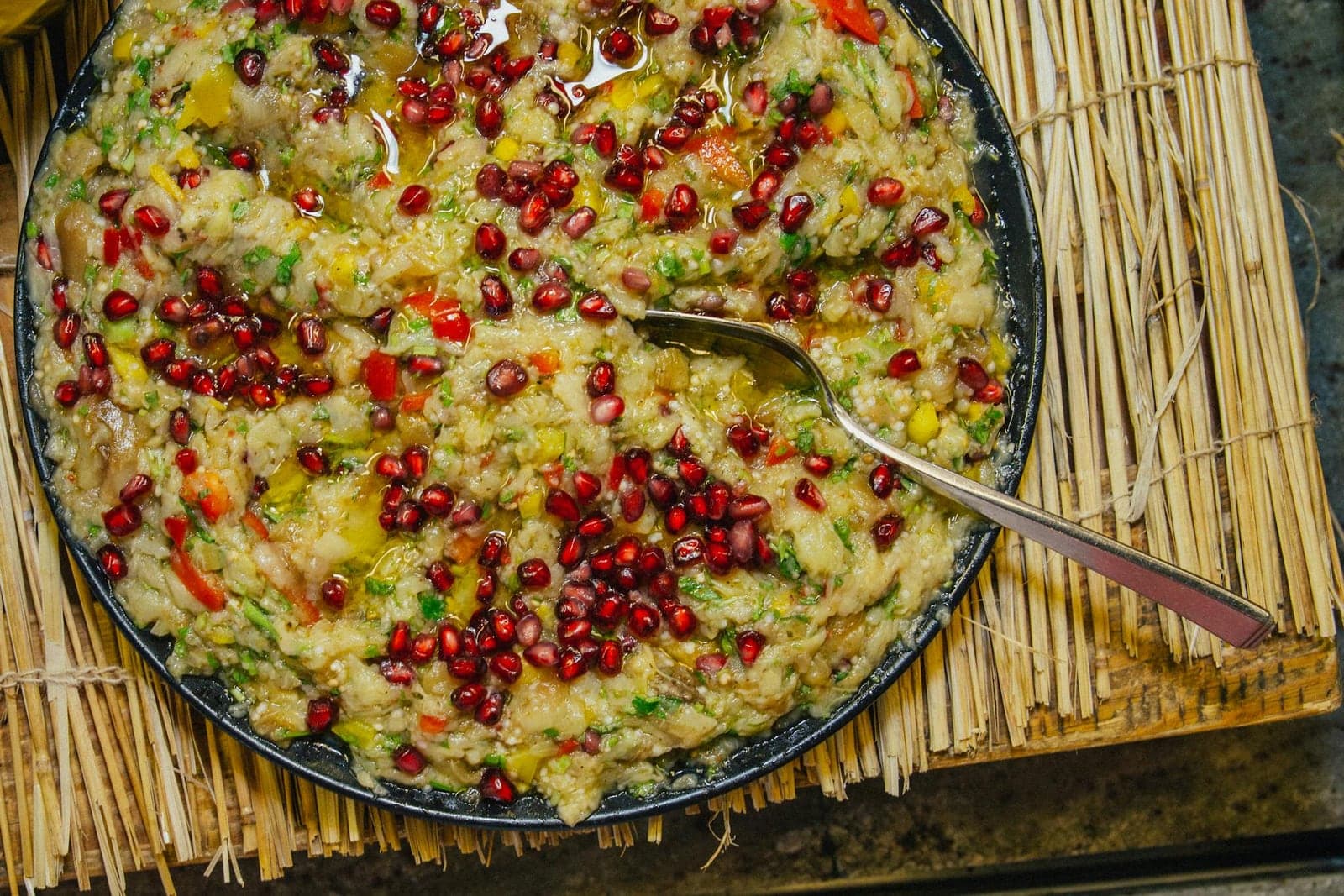
Baba Ganoush should look close to this before serving: clear color contrast, distinct texture, and a ready-to-eat finish.
Have 2 large eggplants, 3 tbsp tahini, 2 tbsp lemon juice (or more to taste) measured and ready before heat goes on. Char the eggplants: Place directly over a gas flame or under the broiler.
Serve with warm pita bread, raw vegetables, or as part of a mezze spread.
Ingredient notes
Shopping focus
Eggplants, tahini, lemon juice (or more to taste), and garlic carry most of the flavor. Spend attention there first.
Prep notes
Set up the ingredients in list order and keep time-sensitive items nearby.
Adjustment logic
If needed, use Greek yogurt in place of Tahini. Creates a tangier, lighter dip; not traditional but delicious
Optional items
Keep the main items intact; use garnish, heat, or acidity for small adjustments.
Shopping guide
Buy first
Start shopping from the main ingredient list so the recipe structure stays intact.
Package check
This ingredient list does not depend heavily on packaged shortcuts, so buy close to the written amounts unless you are intentionally meal prepping.
Cost control
Use store brands, pantry staples, or simpler sides before changing the core ingredients.
Storage planning
Refrigerate in an airtight container for up to 5 days.
Useful Kitchen Picks
These are optional, recipe-relevant searches for tools or pantry staples that can make this specific recipe easier to repeat.
Helpful Pick
Tahini
Pantry upgrade
Tahini can make or break texture. A smoother, better-balanced jar gives you creaminess without bitterness or a stubborn split texture.
This is one of the ingredients where texture quality shows up fast.
A good tahini jar pays off well beyond a single recipe.
Shop tahini for this recipeAs an Amazon Associate I earn from qualifying purchases. Product links are included when they are directly relevant to the recipe.
Char the eggplants: Place directly over a gas flame or under the broiler. Turn every 3-4 minutes until the skin is completely blackened and the eggplant is collapsed and very soft, about 15-20 minutes.
Place charred eggplants in a colander and let cool for 10 minutes. Slice open and scoop out the flesh, discarding the skin and as many seeds as possible. Let drain for 5 minutes to remove excess liquid.
Mash the eggplant flesh with a fork to your desired texture — some prefer it chunky, others smooth.
Add tahini, lemon juice, garlic, olive oil, salt, and cumin. Mix well.
Taste and adjust: add more lemon for brightness, more tahini for nuttiness, more salt as needed.
Transfer to a serving bowl. Drizzle generously with olive oil, sprinkle with parsley and pomegranate seeds if using.
Serve with warm pita bread, raw vegetables, or as part of a mezze spread.
Technique notes
Key method moments pulled from the written steps.
Prep phase
3 steps
Place charred eggplants in a colander and let cool for 10 minutes.
Finish this step before adding ingredients or changing the heat.
Move on after this instruction is complete: place charred eggplants in a colander and let cool for 10 minutes.
Cook phase 1
3 steps
Taste and adjust: add more lemon for brightness, more tahini for nuttiness, more salt as needed.
Final seasoning should happen after the main ingredients have cooked together, when the balance is easiest to judge.
Move on after this instruction is complete: taste and adjust: add more lemon for brightness, more tahini for nuttiness, more salt as needed.
Finish phase
1 step
Serve with warm pita bread, raw vegetables, or as part of a mezze spread.
Add toppings after cooking so fresh, crunchy, or acidic finishes stay distinct.
Plate while the main dish is still hot, then add crunchy, acidic, or fresh garnishes right before serving.
Doneness cues
Look for
Serve with warm pita bread, raw vegetables, or as part of a mezze spread.
Heat cue
If the surface is changing too fast before the center or sauce is ready, lower the heat and give the recipe time to catch up.
Timing cue
Use the 10 minutes prep window to get organized so the cooking stage can move without rushed substitutions.
Final adjustment
Read through Baba Ganoush once before you start.
Troubleshooting
Texture check
Check this step before adding heat or liquid: Add tahini, lemon juice, garlic, olive oil, salt, and cumin.
Timing check
Baba Ganoush starts with about 10 minutes prep. Steady heat and small adjustments are usually enough.
Seasoning check
Before changing seasoning, check this tip: The more charred the skin, the smokier the dip.
Leftover check
Baba ganoush is served at room temperature or cold.
Scaling guide
Half batch
For Baba Ganoush, halve the main ingredients evenly and season lightly until the final taste check.
Double batch
For Baba Ganoush, use a wider pan, larger pot, or second tray so the moderate ingredient list has room.
Timing changes
Cook time starts around 35 minutes; prep starts around 10 minutes.
Leftover math
Refrigerate in an airtight container for up to 5 days.
Make-ahead timeline
Earlier in the day
Start with this setup step: Char the eggplants: Place directly over a gas flame or under the broiler.
Before serving
Plan around 10 minutes of prep and 35 minutes of cooking so the final step lands near serving time.
Leftover plan
Refrigerate in an airtight container for up to 5 days.
Reheat without damage
Baba ganoush is served at room temperature or cold.
Serve with crusty artisan bread for dipping
Finish with a drizzle of high-quality extra virgin olive oil
Pair with a simple arugula salad dressed in lemon vinaigrette
Arrange on a platter for easy sharing at your next gathering
Meal fit
Meal role
Pair this appetizer with sides that add contrast: crisp, fresh, acidic, or starchy as needed.
Best timing
Low-friction timing for Baba Ganoush. Add a small buffer if serving guests.
Diet fit
Keep the sides aligned with vegan and gluten-free: vegetables, grains, sauces, or garnishes should follow the same constraint.
Occasion fit
Good for potluck when sides can be handled while the main recipe cooks.
Creates a tangier, lighter dip; not traditional but delicious
Eggplant is the entire point of baba ganoush
Slightly different flavor but provides the same acidity
The more charred the skin, the smokier the dip. Do not be afraid of blackening it completely.
Draining the eggplant flesh is important — excess liquid makes the dip watery rather than creamy.
For the smokiest flavor, roast over an open gas flame rather than in the oven.
If you do not have a gas stove, use the broiler set to high and turn the eggplants every few minutes.
Refrigerate in an airtight container for up to 5 days. The flavor improves after a day. Drizzle with fresh olive oil before serving.
Baba ganoush is served at room temperature or cold. Remove from the fridge 20 minutes before serving.
Read through Baba Ganoush once before you start. The method timing is a guide—texture and seasoning matter more than the clock.
Per serving (1/3 cup) · 6 servings
A light, low-calorie option · based on a 2,000 cal daily diet
Nutritional values are approximate and may vary based on specific ingredients and preparation methods.
Tell us what was unclear, what you changed, or what needs another look in Baba Ganoush.
Keep Browsing
Follow the ingredients, cooking style, or curated collections that connect naturally to Baba Ganoush.
Baba Ganoush is kept in the public catalog after review for image relevance, ingredient fit, instruction clarity, and practical page quality.