Before you start
Set up the first moves
Start by having optional: 1 lb small potatoes, parboiled and halved, duck legs (moulard or pekin), and kosher salt ready, then mix salt, garlic, thyme, bay leaves, and peppercorns.
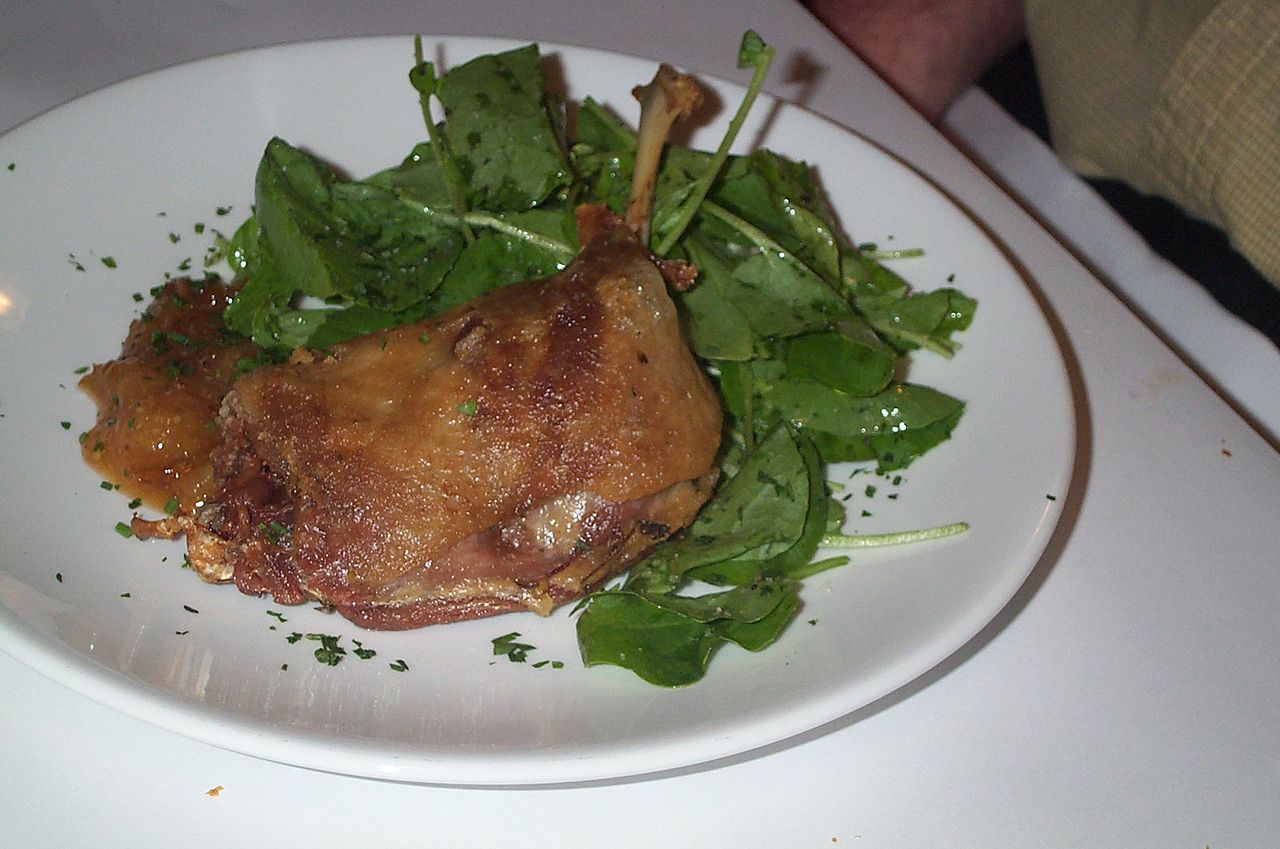
Photo: Stu Spivack / Wikimedia Commons / CC BY-SA 2.0
Prep Time
20 min
Cook Time
4 hr
Total Time
24 hr
Servings
4
4 legs
Difficulty
Advanced
Cost
Premium
$$$
Makes 4 legs · Technique: Oven, Slow Cooker
Classic French duck confit: legs cured in salt and herbs, then slow-cooked submerged in duck fat until the meat falls off the bone.
20m
Prep Time
240m
Cook Time
1440m
Total Time
4
Servings
Hard
Difficulty
Premium $$$
Cost
Recipe by RecipePool Editorial Team
/
Duck confit is duck legs cooked slowly in their own fat until the meat is fall-apart tender, then crisped skin-side down. A weekend project with a huge payoff.
Save the duck fat. It is liquid gold for roasting potatoes.
Kitchen intelligence
Before you start
Start by having optional: 1 lb small potatoes, parboiled and halved, duck legs (moulard or pekin), and kosher salt ready, then mix salt, garlic, thyme, bay leaves, and peppercorns.
Timing read
Plan for 20 minutes prep and 4 hours cooking. Midway check: Cover with foil and cook for 2.5-3 hours until meat is very tender and pulls easily from the bone.
Flavor logic
optional: 1 lb small potatoes, parboiled and halved, duck legs (moulard or pekin), kosher salt, and garlic, smashed carry the main flavor and texture, so measure them before you adjust seasoning or heat.
Serving plan
For French and Main Course, the finish should match this final cue: Serve with sautéed potatoes cooked in a spoonful of the confit fat.
Visual checkpoints
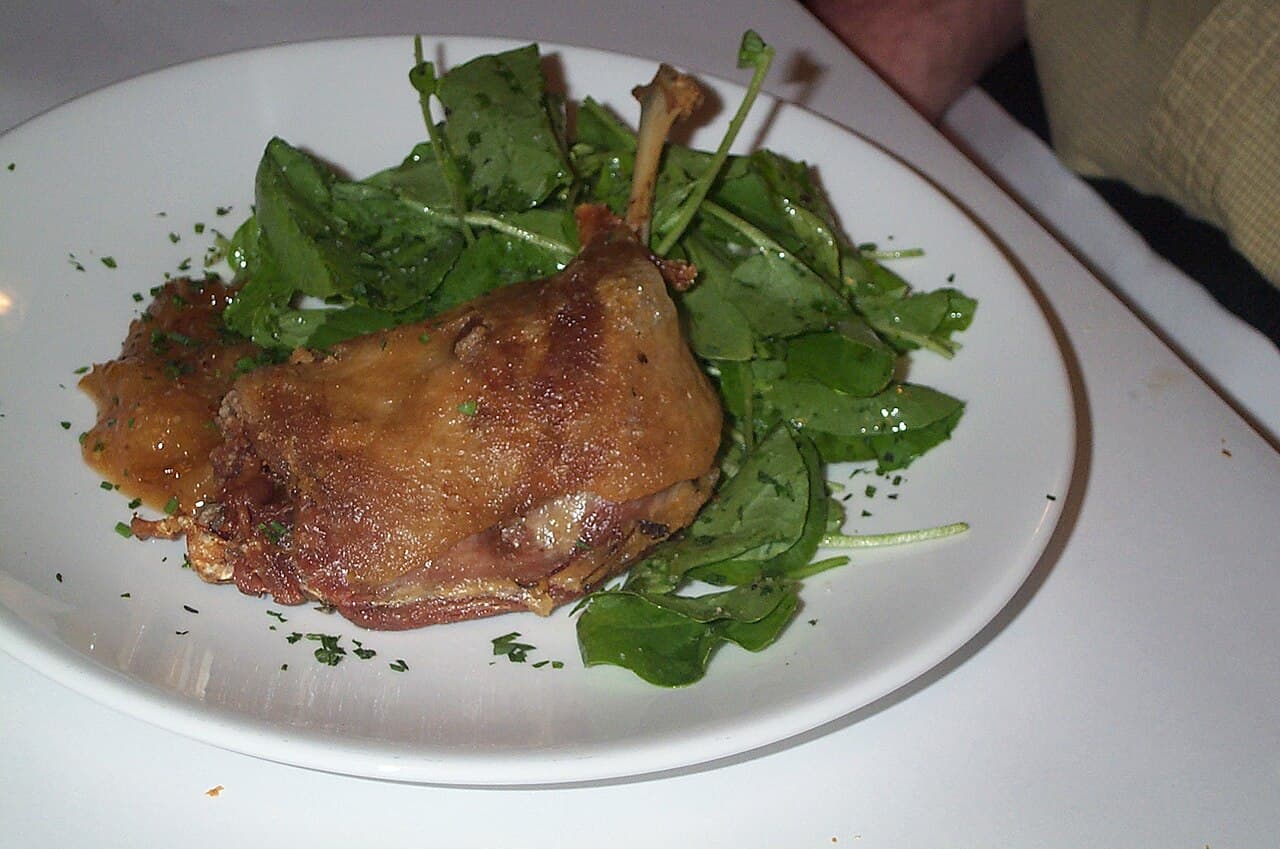
Duck Confit should look close to this before serving: distinct textures, clear color contrast, and a ready-to-eat finish.
Have 4 duck legs (moulard or pekin), 1/4 cup kosher salt, 4 cloves garlic, smashed measured and ready before heat goes on. Mix salt, garlic, thyme, bay leaves, and peppercorns.
Serve with sautéed potatoes cooked in a spoonful of the confit fat.
Ingredient notes
Shopping focus
Optional: 1 lb small potatoes, duck legs (moulard or pekin), kosher salt, and garlic carry most of the flavor. Spend attention there first.
Prep notes
Set up the ingredients in list order and keep time-sensitive items nearby.
Adjustment logic
If needed, use Goose legs in place of Duck legs. Similar fat content and flavor — cook the same way.
Optional items
Keep the main items intact; use garnish, heat, or acidity for small adjustments.
Shopping guide
Buy first
Start shopping from the main ingredient list so the recipe structure stays intact.
Package check
Kosher salt and duck fat (or enough to submerge legs) may come in larger containers than needed; confirm amounts before buying backups.
Cost control
Use store brands, pantry staples, or simpler sides before changing the core ingredients.
Storage planning
Submerged in fat, keeps refrigerated up to 1 month.
Useful Kitchen Picks
These are optional, recipe-relevant searches for tools or pantry staples that can make this specific recipe easier to repeat.
Helpful Pick
Slow Cooker
Useful tool
This dish is mostly about giving the ingredients enough time. A dependable slow cooker makes that hands-off part much easier to repeat.
The easiest win here is steady low heat without needing to hover over the pot.
If you like batch cooking or low-effort dinners, this is one of the most reusable tools you can buy.
Shop slow cooker options for this recipeHelpful Pick
Olive Oil
Pantry upgrade
A clean everyday olive oil is useful for browning, roasting, and finishing without adding harsh flavor. It is one of the safest pantry upgrades for savory cooking.
This is a reusable staple, not a single-use ingredient.
A good everyday olive oil earns its space because it shows up in so many recipes.
Shop olive oil for this recipeAs an Amazon Associate I earn from qualifying purchases. Product links are included when they are directly relevant to the recipe.
Mix salt, garlic, thyme, bay leaves, and peppercorns. Rub all over duck legs. Refrigerate uncovered on a rack for 24-36 hours.
Rinse legs thoroughly under cold water and pat completely dry. Let sit at room temperature for 1 hour.
Preheat oven to 225°F. Place legs skin-side up in a snug oven-safe dish. Melt duck fat and pour over legs until fully submerged.
Cover with foil and cook for 2.5-3 hours until meat is very tender and pulls easily from the bone.
Legs can be stored submerged in fat in the refrigerator for up to 1 month at this point.
To serve: scrape off excess fat. Heat a skillet over medium-high heat. Sear legs skin-side down for 4-5 minutes until skin is deeply golden and crisp. Flip briefly to warm through.
Serve with sautéed potatoes cooked in a spoonful of the confit fat.
Technique notes
Key method moments pulled from the written steps.
Prep phase
3 steps
Rinse legs thoroughly under cold water and pat completely dry.
Finish this step before adding ingredients or changing the heat.
Move on after this instruction is complete: rinse legs thoroughly under cold water and pat completely dry.
Cook phase 1
3 steps
Legs can be stored submerged in fat in the refrigerator for up to 1 month at this point.
Finish this step before adding ingredients or changing the heat.
Move on after this instruction is complete: legs can be stored submerged in fat in the refrigerator for up to 1 month at this point.
Finish phase
1 step
Serve with sautéed potatoes cooked in a spoonful of the confit fat.
Add toppings after cooking so fresh, crunchy, or acidic finishes stay distinct.
Plate while the main dish is still hot, then add crunchy, acidic, or fresh garnishes right before serving.
Doneness cues
Look for
Serve with sautéed potatoes cooked in a spoonful of the confit fat.
Heat cue
If the surface is changing too fast before the center or sauce is ready, lower the heat and give the recipe time to catch up.
Timing cue
Use the 20 minutes prep window to get organized so the cooking stage can move without rushed substitutions.
Final adjustment
For Duck Confit, check the thickest part for doneness, not just the edges.
Troubleshooting
Texture check
Check this step before adding heat or liquid: Cover with foil and cook for 2.5-3 hours until meat is very tender and pulls easily from the bone.
Timing check
Duck Confit starts with about 20 minutes prep. Change heat, liquid, or timing one step at a time.
Seasoning check
Before changing seasoning, check this tip: Duck fat is essential — it is available at specialty butchers or rendered from duck trimmings.
Leftover check
Scrape off fat and sear skin-side down in a hot pan.
Scaling guide
Half batch
For Duck Confit, halve the main ingredients evenly and season lightly until the final taste check.
Double batch
For Duck Confit, use a wider pan, larger pot, or second tray so the short ingredient list has room.
Timing changes
Start from the 4 hours cook window and add time only if the larger batch is crowded.
Leftover math
Submerged in fat, keeps refrigerated up to 1 month.
Make-ahead timeline
Earlier in the day
Start with this setup step: Mix salt, garlic, thyme, bay leaves, and peppercorns.
Before serving
Plan around 20 minutes of prep and 4 hours of cooking so the final step lands near serving time.
Leftover plan
Submerged in fat, keeps refrigerated up to 1 month.
Reheat without damage
Scrape off fat and sear skin-side down in a hot pan.
Serve alongside a fresh baguette and salted butter
Pair with a crisp green salad with Dijon vinaigrette
Meal fit
Meal role
Pair this main course with sides that add contrast: crisp, fresh, acidic, or starchy as needed.
Best timing
Hands-on timing for Duck Confit. Add a small buffer if serving guests.
Diet fit
Keep the sides aligned with gluten-free and dairy-free: vegetables, grains, sauces, or garnishes should follow the same constraint.
Occasion fit
Good for date night and holiday when sides can be handled while the main recipe cooks.
Similar fat content and flavor — cook the same way.
Less traditional but works for a one-time cook; don't store in olive oil long-term.
1 tbsp provides a similar aromatic profile.
Duck fat is essential — it is available at specialty butchers or rendered from duck trimmings.
Don't skip the cure — it seasons the meat and improves texture.
Confit legs stored in fat improve with age — a week in the fridge is ideal.
Save the confit fat — it is liquid gold for roasting potatoes.
Submerged in fat, keeps refrigerated up to 1 month. The flavor improves over the first week.
Scrape off fat and sear skin-side down in a hot pan. The meat is already fully cooked.
For Duck Confit, check the thickest part for doneness, not just the edges. Rest briefly before serving if the recipe calls for it.
Per serving (1 leg)
A hearty, energy-rich serving · based on a 2,000 cal daily diet
Nutritional values are approximate and may vary based on specific ingredients and preparation methods.
Tell us what was unclear, what you changed, or what needs another look in Duck Confit.
Keep Browsing
Follow the ingredients, cooking style, or curated collections that connect naturally to Duck Confit.