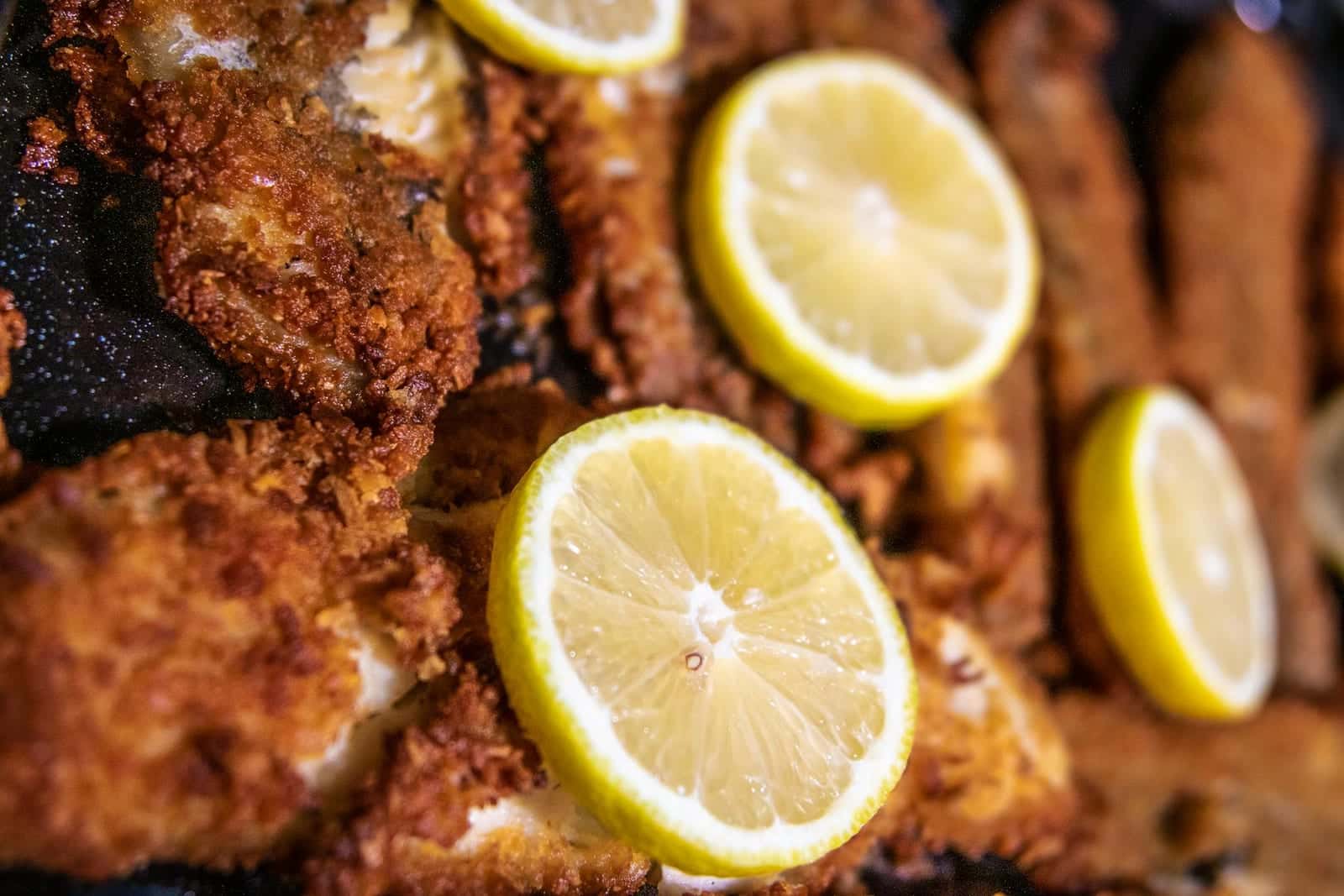
A Word on the Fish Counter
The fish at most supermarkets is fine — not great, not terrible. The mistake home cooks make is treating all of it as interchangeable.
Before you buy, ask the counter person when the fish arrived. "Today" or "yesterday" is the right answer. Anything older than two days, skip and pick a different cut. Look at the eyes (if whole) — clear and bulging, not sunken or cloudy. Look at the flesh — translucent and tight, not gray or pulling apart in flakes. Smell — the fish should smell like clean ocean, not fishy. "Fishy" is a sign the fish is past its prime.
If your supermarket has a packed-on-styrofoam case rather than a real counter, look at the packaging date. Buy what was packaged most recently. The styrofoam case can be perfectly good if turnover is fast and the date is current.
If frozen is your only option, that is fine — flash-frozen fish at sea is often fresher than "fresh" fish that has been sitting on a counter for three days. Thaw it overnight in the fridge, not on the counter or in water.
Fish One: Salmon — The Easy Win
Salmon is the home cook's reliable fish. It is fatty, forgiving, available everywhere, and works with almost any seasoning.
**The cut to buy:** Skin-on fillets, one inch thick at the thickest part, four to six ounces per portion. Center-cut is easier to cook evenly; tail pieces taper and overcook on the thin end. If you can choose, sockeye and king have deeper flavor; farmed Atlantic is the milder, fattier choice.
**The technique that almost always works:** Pat dry. Salt the skin side and the flesh side. Heat a stainless or cast iron pan over medium-high heat with a tablespoon of neutral oil until the oil shimmers. Lay the salmon skin-side down and press down with a spatula for 10 seconds to keep the skin flat. Do not move the salmon. Cook for four to five minutes on the skin side, until the flesh is opaque about three-quarters of the way up. Flip, cook one to two more minutes, and rest off the heat for two minutes before serving.
The skin should be crisp. The center should be just slightly translucent — that is what people pay restaurant prices for. If it looks fully cooked through, you have gone too long.
**Mistakes to avoid:** Do not start with a cold pan. Do not flip more than once. Do not skip the salt; salmon needs more than you think.
Fish Two: Cod — The Forgiving Workhorse
Cod is the fish to learn flaky white-fish cooking on. It is mild, flakes beautifully when properly cooked, and is widely available.
**The cut to buy:** Skinless fillets, an inch thick. Avoid pieces that are noticeably thin on one end — they cook unevenly.
**The technique that almost always works:** Pat dry. Salt. Dust with flour on one side only. Heat oil in a nonstick or carbon steel pan over medium heat. Lay the cod flour-side down. Cook three to four minutes until the flour-side is golden. Flip carefully — cod is delicate — cook two to three more minutes. Total time, six to seven minutes depending on thickness.
The flour dusting is the technique most home cooks have not tried. It produces a light crust that helps the fish release from the pan and keeps the flesh from breaking when flipped.
**Mistakes to avoid:** Do not skip patting the fish dry — wet fish steams instead of sears. Do not crowd the pan; two fillets at a time, with space between them. Do not use high heat; cod gets rubbery if cooked too hot.
Fish Three: Trout — Underrated and Underpriced
Trout is one of the best supermarket fish almost no one buys. It is freshwater, mild, faintly nutty, and typically costs less than salmon. The whole, butterflied trout common at many supermarkets is a wonderful weeknight dinner.
**The cut to buy:** Whole butterflied trout (head off, opened flat, bones removed). One trout serves one to two people depending on size. Look for clear eyes if heads are on; bright pink-orange flesh; firm texture.
**The technique that almost always works:** Pat dry. Salt the cavity and the skin. Stuff the cavity with a few lemon slices, fresh thyme, and a knob of butter. Heat a tablespoon of oil in a large skillet over medium-high heat. Lay the trout flat, skin side down, and cook four to five minutes until the skin is crisp and the flesh near the bone has turned opaque. Flip carefully — the trout opens like a book — and cook one to two minutes on the flesh side. Serve immediately with the lemon and herbs from inside.
Total time: under ten minutes from pan to plate. Trout is one of the few weeknight dinners that genuinely feels like a small luxury.
**Mistakes to avoid:** Do not skip salting the cavity — fish flavor lives in the cavity and around the bones. Do not overcook; trout is thinner than cod and dries out quickly.
Fish Four: Tilapia and Other Mild White Fish — Where Sauce Matters
Tilapia, sole, swai, basa, and similar mild white fish are inexpensive and widely available, but they are bland on their own. They need a sauce or strong seasoning to be interesting. The technique below works for any thin mild white fish.
**The cut to buy:** Skinless fillets. Look for fillets that are not torn or pulling apart at the edges, which indicates poor handling.
**The technique that almost always works:** Bake in a sauce. Heat oven to 400°F. Lay fish fillets in a single layer in a baking dish. Pour over a sauce — lemon and garlic butter, tomato and capers, coconut milk and ginger, or any flavorful liquid — and bake for 12 to 15 minutes until the fish is opaque and flakes easily with a fork.
Baking in liquid does two things. It keeps thin, mild fish from drying out. And it lets a flavorful sauce permeate the fish from below. Pan-frying tilapia by itself produces a dry, characterless result; baking it in a real sauce produces a dish people will actually enjoy.
**Mistakes to avoid:** Do not pan-fry plain tilapia and expect it to be interesting. Do not skip a sauce or strong seasoning — these fish need backup. Do not overcook; check at 10 minutes by testing with a fork.
The Habit That Changes Everything
If you do nothing else after reading this, buy fish more often. Most home cooks treat fish as a special occasion ingredient. The fish at a normal supermarket — properly chosen, properly stored, properly cooked — makes excellent weeknight meals. The barrier is almost always the unfamiliarity, not the cost or the difficulty. Cook fish six times in two months and that barrier disappears.